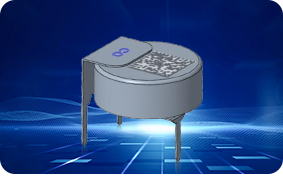
Overview of Fuel Cell and Fixed Potential Electrolytic Carbon Monoxide Sensor Technologies
Electrochemical carbon monoxide sensors are divided into two technical routes: Potentiometric Electrochemical CO Sensor and Fuel Cell CO Sensor.
Among them, constant potential electrolytic sensors usually adopt a three electrode structure, so they are also commonly referred to as "three electrode carbon monoxide sensors" or "traditional electrochemical carbon monoxide sensors" in the industry; Fuel cell sensors generate detection current through spontaneous oxidation-reduction reactions without the need for an external bias voltage.
There are significant differences in the working mechanism, structural design, and application scenarios between the two types of sensors. The main similarities and differences between the two are shown in the table below:
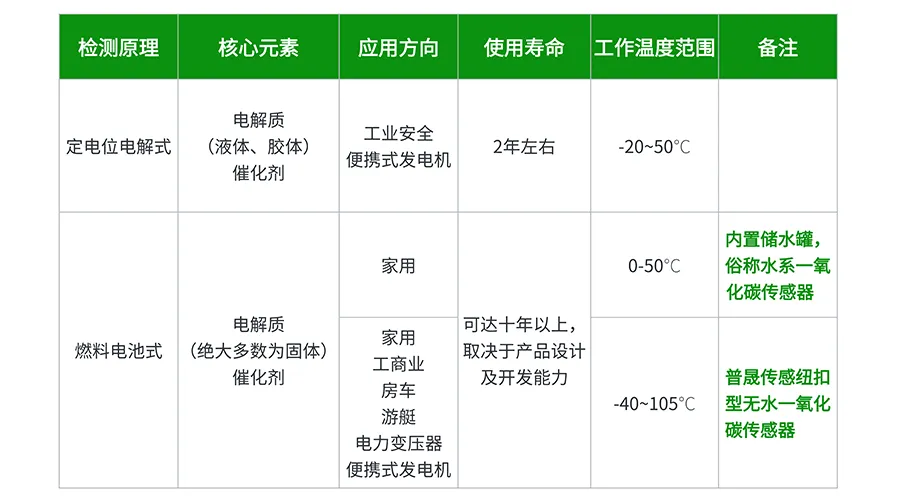
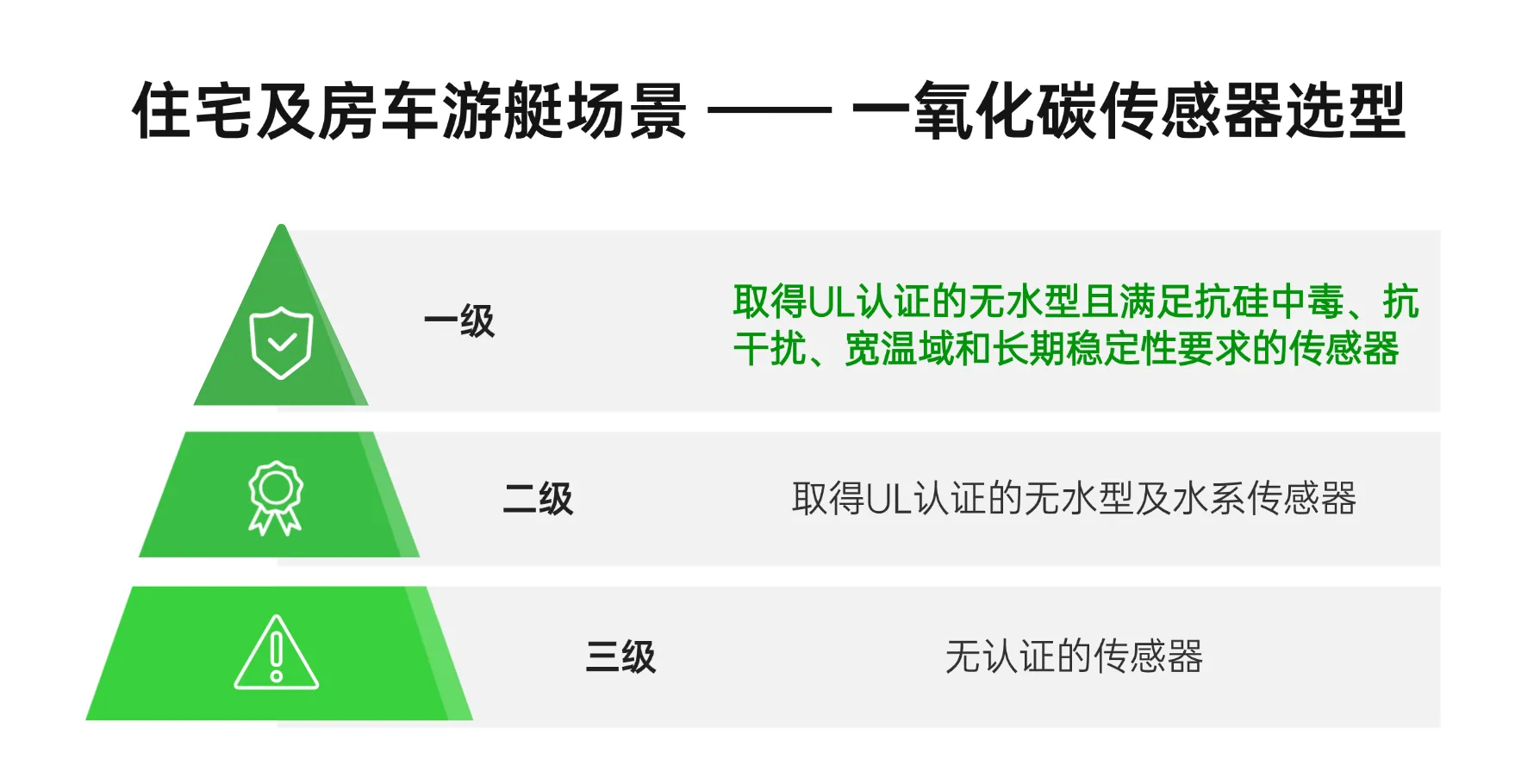
The constant potential electrolytic carbon monoxide sensor is mainly used in the field of industrial safety due to its short lifespan, regular calibration, and narrow temperature range; At present, fuel cell type carbon monoxide sensors are mainly used in the direction from household to RV to yacht, which can be further divided into two technical solutions: water-based sensors with water storage structures and waterless sensors without water storage structures.
But there are several confusing concepts here:
Water system sensors refer to sensors that use liquid electrolytes - in reality, sensors are designed with built-in water storage tanks, but still use solid electrolytes;
The water in the water system sensor is the electrolyte - water is a necessary reactant for the carbon monoxide oxidation reaction, and solid electrolytes are still used. Water is consumed at all times during the life cycle of the sensor.
The lifespan of water sensors is not related to water - as mentioned above, water is a necessary substance for chemical reactions to occur, and the amount of water directly determines the lifespan of the sensor;
2. The water in water based carbon monoxide sensors and anhydrous carbon monoxide sensors refers to whether the electrolyte is liquid or solid - in fact, it refers to whether a water storage tank is designed;
3. All fuel cell type carbon monoxide sensors are anhydrous - the water-based carbon monoxide sensor with a built-in water storage tank also uses the fuel cell principle;
4. The service life of all anhydrous carbon monoxide sensors is over ten years - if the sensor design is not good, the service life may not even reach one year.
In summary, water based carbon monoxide sensors refer to fuel cell type carbon monoxide sensors that use solid electrolytes but incorporate built-in water storage tanks. The waterless carbon monoxide sensor is a technological iteration product of the water-based carbon monoxide sensor. The part of the chemical reaction between the two is completely the same, except that the waterless carbon monoxide sensor eliminates the built-in water storage tank and optimizes the catalyst to recycle water molecules in the environment as reactants for detection. The stability and resistance to high temperature or low humidity of the sensor are determined by the self circulation ability of the catalyst water.
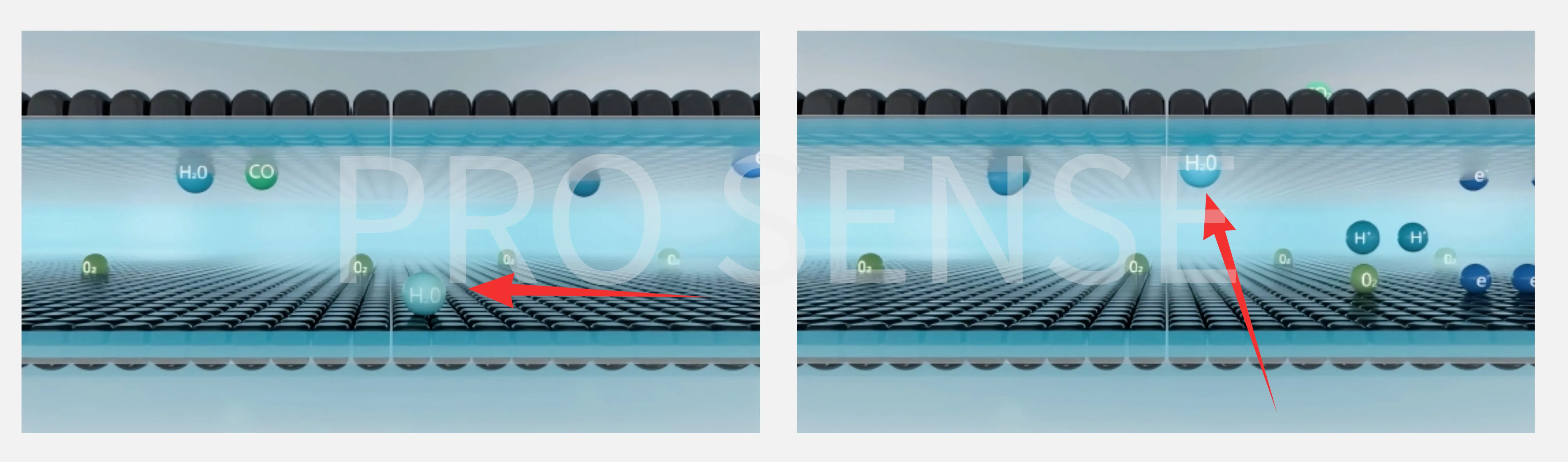
The reaction water of the water system sensor comes from the natural diffusion of water in the built-in water storage tank, as shown in the following figure.

The button type anhydrous carbon monoxide sensor uses water from the recycling of water molecules in the environment, as shown in the following figure.

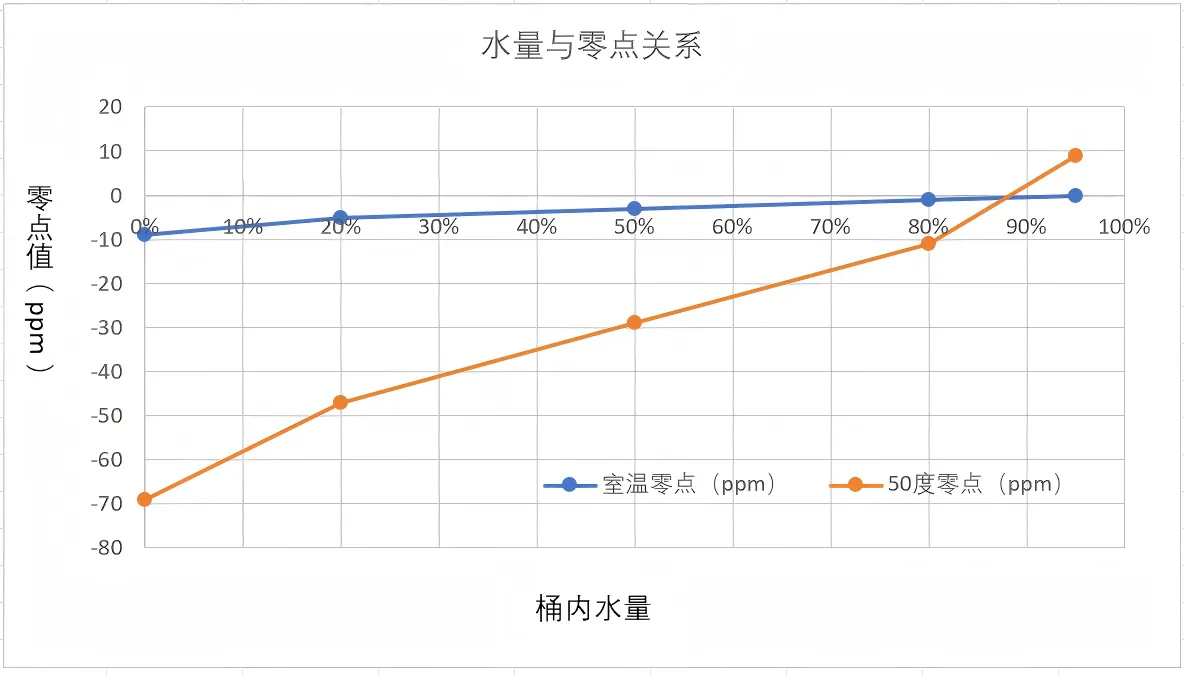
As one of the oldest gas sensors in the world, the water-based fuel cell carbon monoxide sensor is characterized by a built-in water storage tank that ensures the basic response performance of the sensor above 0 degrees Celsius when the water volume is sufficient. However, the water in the built-in water storage tank or the water generated by the electrode reaction may freeze at temperatures below 0 degrees Celsius, causing the sensor to fail at low temperatures; It may also significantly shorten the lifespan of the sensor due to prolonged exposure to high temperatures, which accelerates the rate of water evaporation in the water storage tank.
In addition, the water in the built-in water storage tank of the carbon monoxide sensor in the water system is constantly consumed. The amount of water in the water storage tank gradually decreases, and the amount of air gradually increases. When the temperature rises, the volume expansion coefficient of the liquid is much smaller than that of the gas. Therefore, due to the volume expansion, the pressure applied to the electrode also increases significantly, resulting in severe zero drift of the sensor at high temperatures. Please refer to the following figure for details:
The failure of water-based electrochemical CO sensors is one of the important reasons for the recall of carbon monoxide alarms for residential use in Europe and America, especially in the North American and Western European markets. Due to the sensitivity of water system carbon monoxide sensors to temperature and humidity changes, the products of this technology route are not suitable for wide temperature applications such as RVs, ships, outdoor generators, etc.
Due to the built-in water storage tank, the water system CO sensor may encounter problems such as water evaporation rate far exceeding the design speed, leakage, freezing, or electrode aging with the diversity of usage environments, resulting in the following two types of risks:
1. Fail to Alarm - highest risk
This is the most serious failure mode and also the most concerning issue for regulatory agencies.
Possible reasons:
·The water in the storage tank has been consumed
·Reduced catalyst activity
·Low temperature causes ice formation inside the sensor
·Zero drift after long-term storage or use
Result:
The alarm device failed to operate according to the standard in the presence of hazardous concentration CO
Directly threatening the safety of personnel's lives
Easy to trigger product recall
There have been multiple cases in the past in the US market where CO alarms were recalled due to their inability to sound properly. Recall notices typically state:
“The alarm may fail to alert consumers to dangerous levels of carbon monoxide.”
2. False Alarm
The water system CO sensor may also be affected by:
·Interference gas exists
·Poor consistency of temperature impact
·Electrode corrosion
·Temperature cycle
Resulting in:
zero drift
Continuous alarm in CO free environment
Intermittent alarm
Although the risk of false alarm is lower than that of false alarm, but:
Users may remove the alarm device
Users lose trust in the product
Brand reputation damaged
It may also lead to large-scale recalls, claims, or class action lawsuits
Key technical points: Selection of carbon monoxide sensors
In the compliance system of carbon monoxide (CO) alarms, sensors are not only the core detection components, but also the key components that determine the safety performance, certification compliance, and long-term reliability of the entire machine.
For alarm manufacturers, the selection of sensors is not only related to whether the product can pass relevant standard certification smoothly, but also directly affects the stability performance of the product throughout its entire life cycle, as well as the business risk and brand reputation of the enterprise.
Sensor selection is no longer a simple device procurement decision, but a strategic choice involving technical roadmap, regulatory compliance, quality risk control, and market competitiveness.
ProSense Anhydrous Solid State Fuel Cell Technology Carbon Monoxide Sensor
FC-CO-5000 and FCW-CO-5000-0X series
Development for thermal runaway monitoring of energy storage systems, residential fire protection, RV, yacht, and commercial building safety monitoring needs
Focused on core material science, international standard participation, and vertical application landing, ProSense has launched the FC-CO-5000 and FCW-CO-5000-0X series of waterless all solid state fuel cell technology carbon monoxide sensors based on independent research and development capabilities. It is currently the only CO sensor solution in the industry that meets UL certification requirements for multiple application scenarios in residential, RV, and yacht areas in both the European Union and North America.
Simultaneously certified by UL 2075 in the United States and CAN/ULC-S 588 in Canada
Wide temperature range: -40 ℃ to 105 ℃
No risk of low-temperature freezing and high-temperature dehydration
Has excellent resistance to silicon poisoning and VOC interference
10 years of longevity
Excellent long-term stability performance
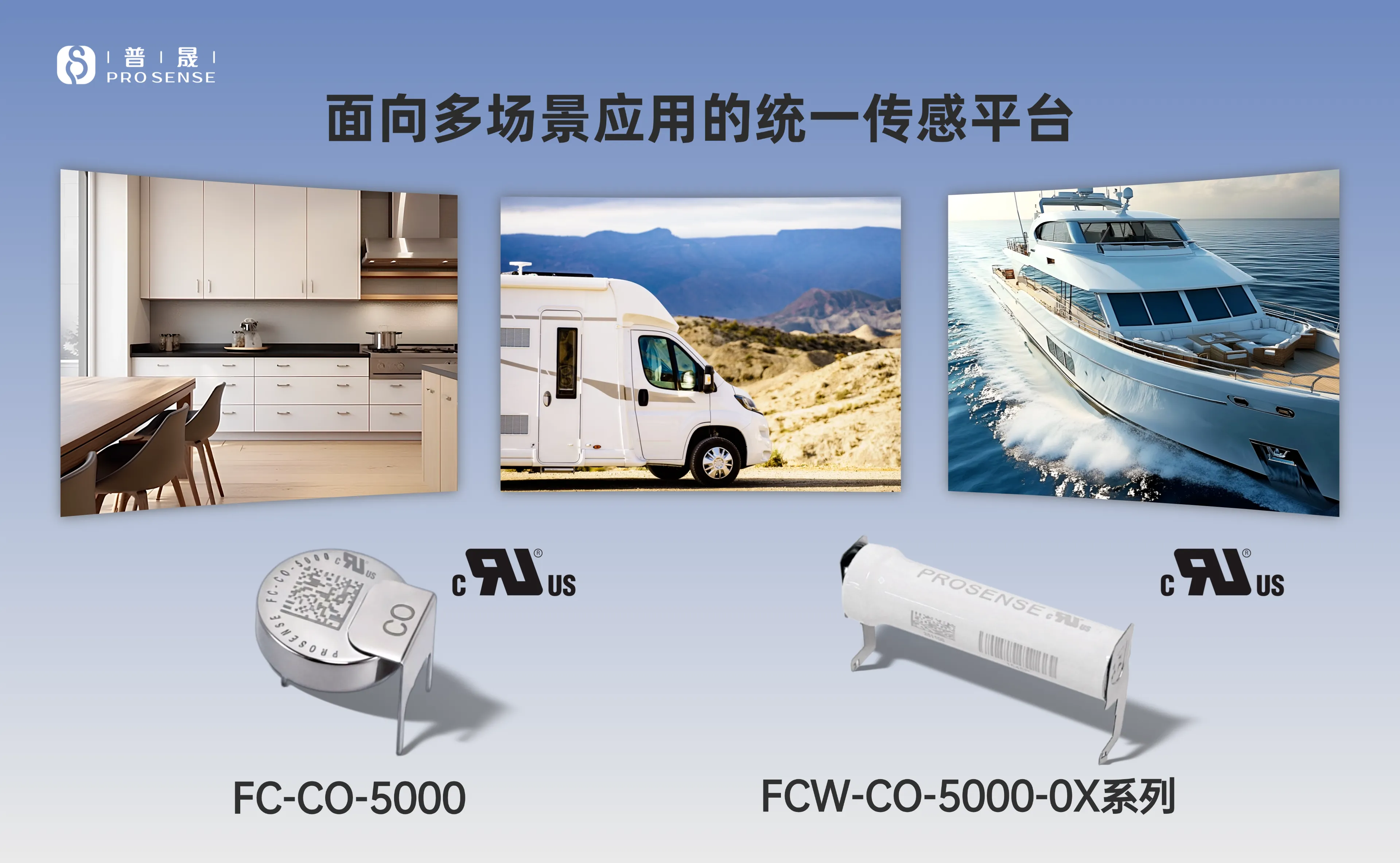
In the design phase, the product is systematically planned around multi application scenario compliance and long-term reliable operation, fully considering the comprehensive requirements of temperature adaptability, stability, and consistency of sensors under different environmental conditions. This helps the whole machine manufacturer build a product portfolio covering multiple markets on a single sensing platform.
By adopting FC-CO-5000 and FCW-CO-5000-0X, complete machine manufacturers can reduce the design and certification complexity caused by differences in application scenarios while meeting the requirements of EN50291-1, EN50291-2, UL 2034 (5th edition), and CSA 6.19-17 standards.
About ProSense
ProSense is a high-tech enterprise dedicated to the research and manufacturing of advanced gas sensors, committed to providing high-performance and high reliability sensing solutions for global customers. The company continues to invest in core technology research and development, overcome key pain points in the industry, and continuously lead the development direction of gas sensing technology. With innovative products and excellent quality, ProSense is gradually growing into an important promoter and leader in the global gas safety monitoring field.
ProSense adheres to the full stack self-developed technology route, and has established a kilogram level gas sensor catalyst research and development base and an automated production aging calibration system for millions of gas sensors per year. Its product line covers the fields of toxic and harmful, flammable and explosive, and environmental gas detection; ProSense multiple innovative products have become core sensing components in vertical fields such as smart firefighting, industrial testing, and energy storage safety.