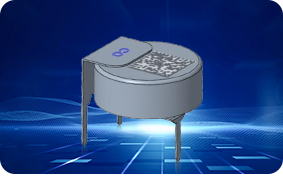
Overview of the European Market
With the continuous improvement of residential safety regulations and the rapid popularization of smart home systems, wireless interconnected carbon monoxide (CO) alarms are becoming an important development direction in the European residential safety market. Compared with traditional standalone CO alarms, wireless interconnected products can achieve multi room synchronous alarm, remote notification, and linkage with smart home platforms, which not only improves the level of life safety, but also brings new market opportunities for alarm manufacturers and sensor suppliers.
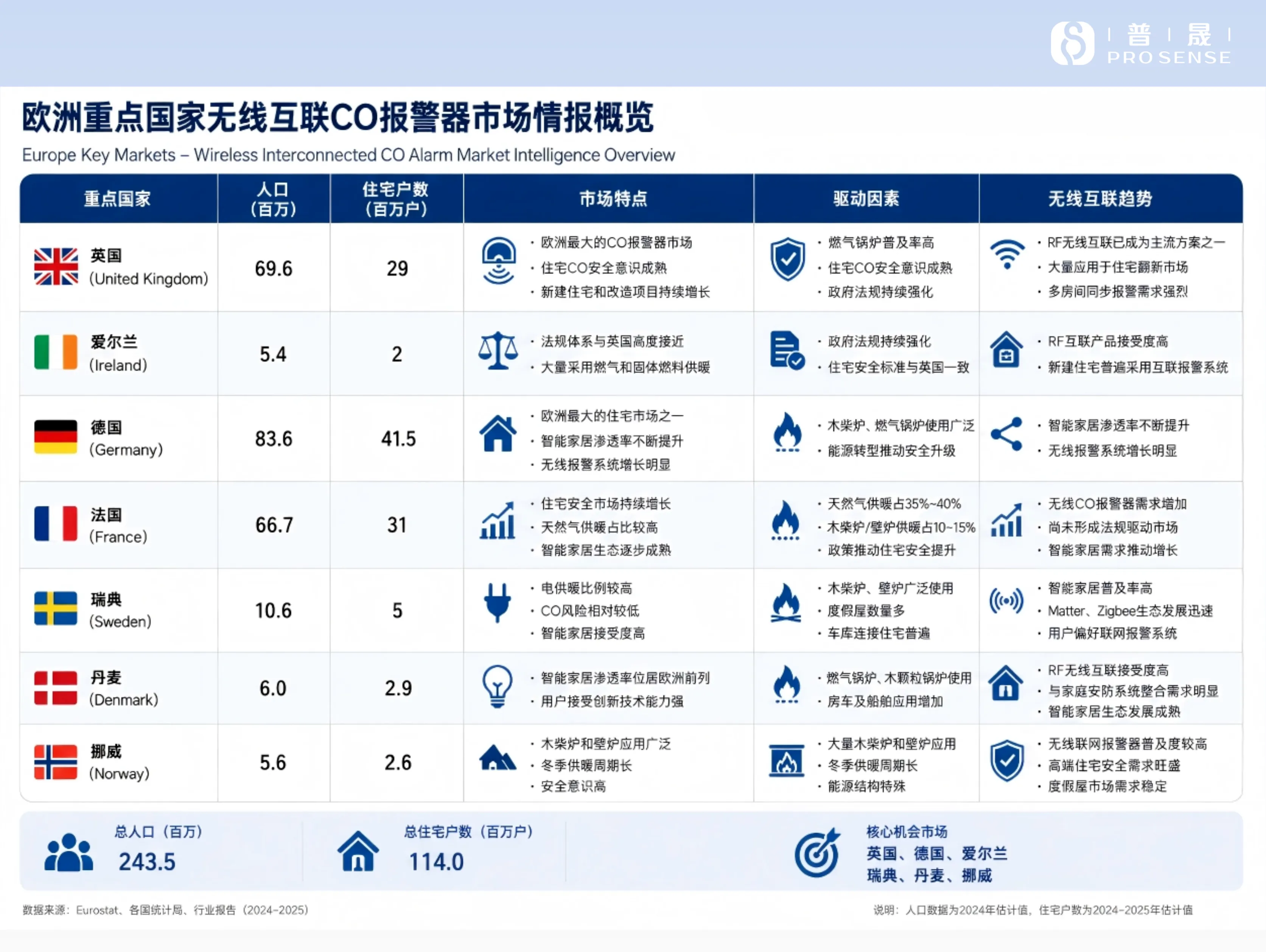
At present, there is no unified regulation in Europe mandating the installation of wireless interconnected CO alarms in residential areas, but multiple countries have formed clear market demand, with the UK leading the way.
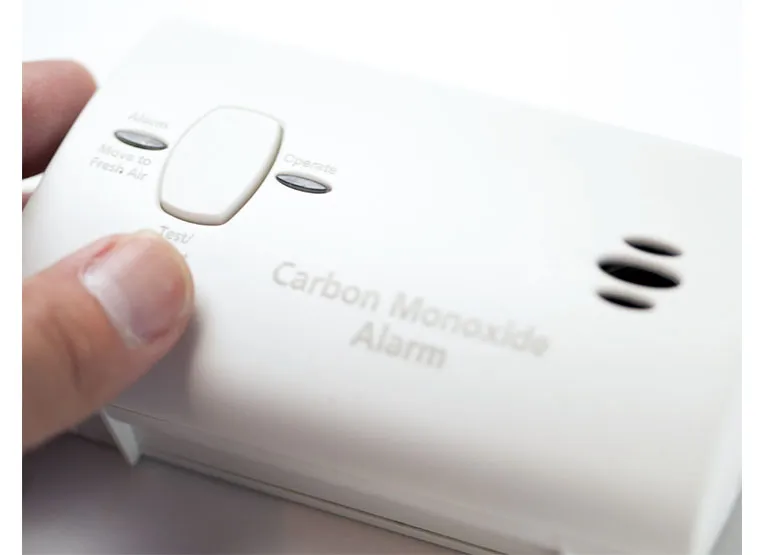
Current Status of European Regulations
European residential CO alarms are mainly certified according to the EN 50291-1 series standards.
EN 50291-1 not only covers standalone CO alarms, but also includes product requirements with wireless radio frequency (RF) interconnection function. Therefore, wireless interconnection CO alarms can be certified and market access directly within the existing European standard framework.
Current European regulations focus on:
Installation requirements for CO alarm
Product performance and reliability
Alarm sound pressure and coverage range
Wireless Interconnection Function Security
Most countries do not mandate the use of wireless connectivity, and manufacturers can choose between standalone or wireless solutions based on market demand.
Market analysis of key countries
ProSense: Making Global Compliance Simple
For cross-border e-commerce and whole machine alarm manufacturers who hope to enter both the EU and North American markets, choosing sensor solutions with multi scenario compliance capabilities and mature engineering verification foundations is an important prerequisite for reducing certification risks and accelerating the market launch process.
ProSense FC-CO-5000 and FCW-CO-5000-0X: A Unified Sensing Platform Covering Multiple Scenarios
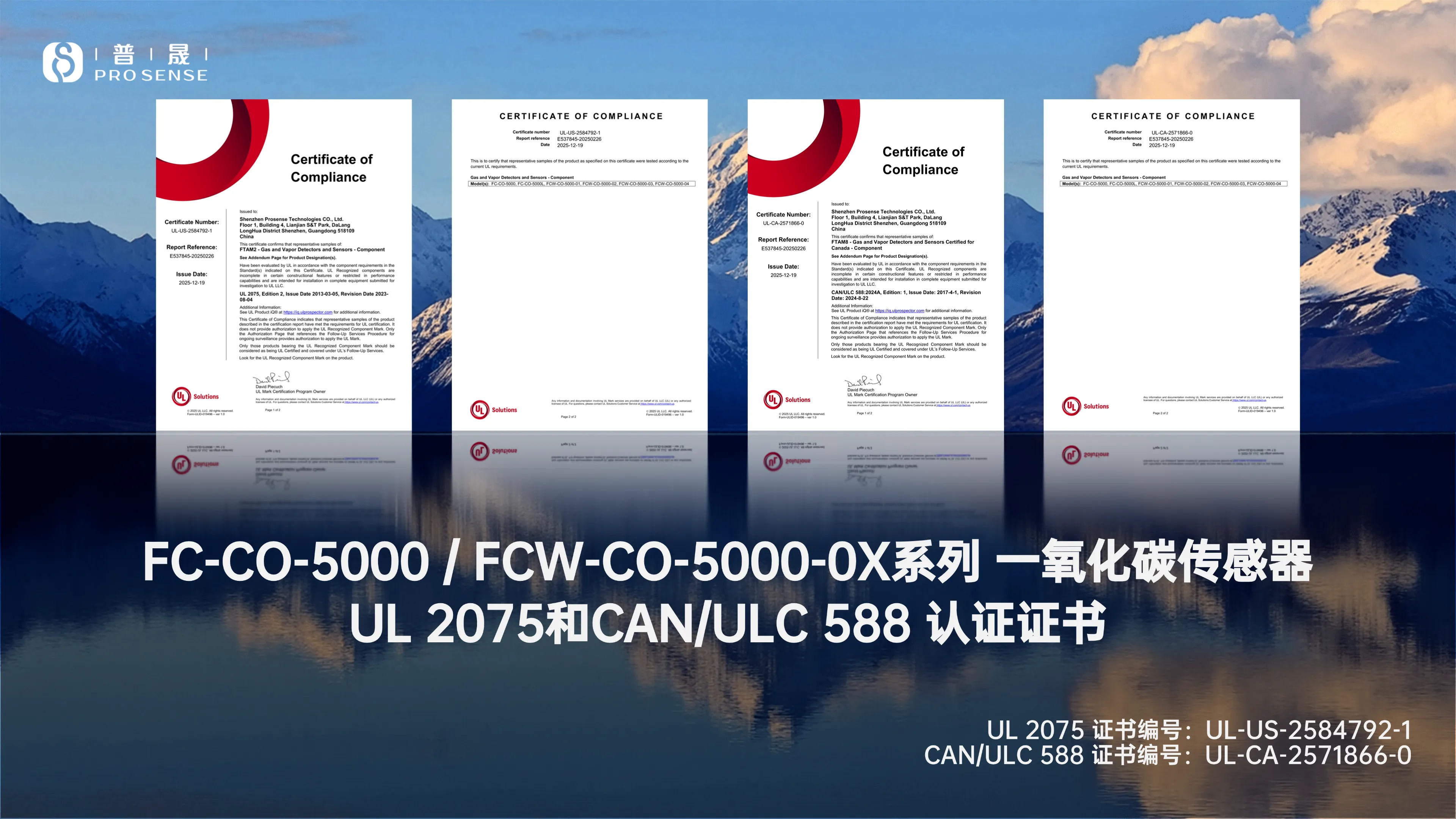
The FC-CO-5000 and FCW-CO-5000-0X series carbon monoxide sensors launched by ProSense based on independent research and development capabilities are currently the only CO sensor solutions in the industry that meet UL certification requirements for residential, RV, and yacht applications in both the European Union and North America.
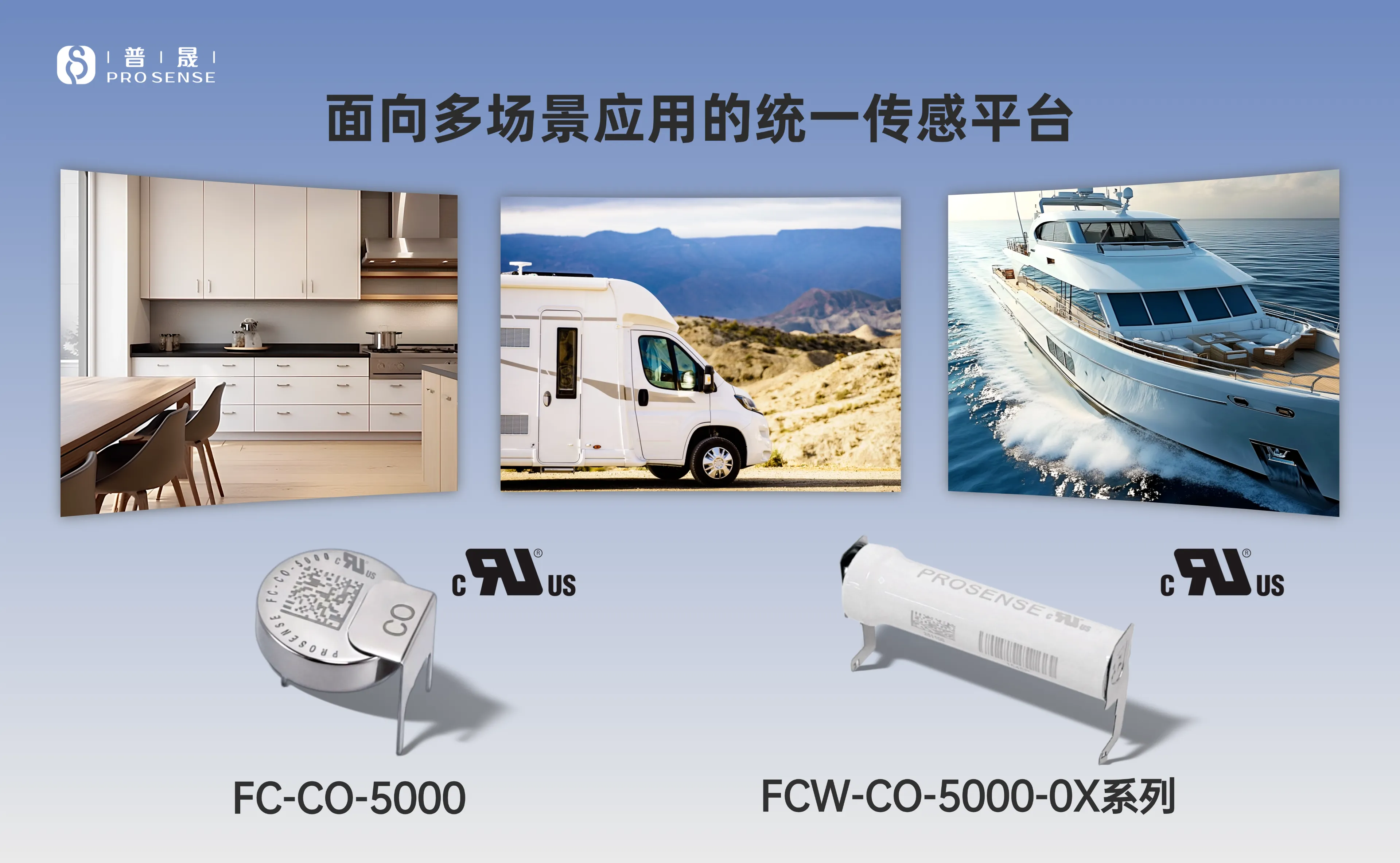
In the design phase, the product is systematically planned around multi application scenario compliance and long-term reliable operation, fully considering the comprehensive requirements of temperature adaptability, stability, and consistency of sensors under different environmental conditions. This helps the whole machine manufacturer build a product portfolio covering multiple markets on a single sensing platform.
By adopting FC-CO-5000 and FCW-CO-5000-0X, complete machine manufacturers can reduce the design and certification complexity caused by differences in application scenarios while meeting the requirements of EN50291-1, EN50291-2, UL 2034 (5th edition), and CSA 6.19-17 standards.
Market oriented value
Unified platform: One sensor covers multiple application scenarios, simplifying product portfolio
Compliance guarantee: supporting certification needs for mainstream residential, RV, and yacht markets in the European Union and North America
Reliable operation: Adapt to complex environmental conditions and enhance the long-term stability of end products
Accelerating time to market: reducing the time and cost pressure of repeated testing and re certification
About ProSense
ProSense is a high-tech enterprise dedicated to the research and manufacturing of advanced gas sensors, committed to providing high-performance and high reliability sensing solutions for global customers. The company continues to invest in core technology research and development, overcome key pain points in the industry, and continuously lead the development direction of gas sensing technology. With innovative products and excellent quality, ProSense is gradually growing into an important promoter and leader in the global gas safety monitoring field.
ProSense adheres to the full stack self-developed technology route, and has established a kilogram level gas sensor catalyst research and development base and an automated production aging calibration system for millions of gas sensors per year. Its product line covers the fields of toxic and harmful, flammable and explosive, and environmental gas detection; ProSense multiple innovative products have become core sensing components in vertical fields such as smart firefighting, industrial testing, and energy storage safety.