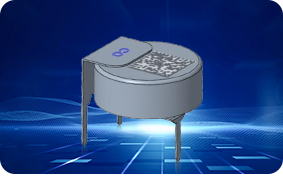
From a Limited Response at 7,000 ppm Hydrogen to Condensation-Induced Readings of Approximately 3,000 ppm: Why Thermal Conductivity Sensors is Unsuitable for Early Warning in BESS and AI Data Centers
As AI data centers and battery energy storage systems (BESS) continue to expand, detecting flammable gases such as hydrogen and carbon monoxide has become an essential element of safety protection for mission-critical facilities.
In facilities where personnel safety, asset protection, and business continuity are paramount, gas detection systems must do more than indicate the presence of a gas. They may also initiate multi-level alarms, activate emergency ventilation, control equipment operation, and inform emergency response decisions. If measured concentrations do not accurately represent actual site conditions, a sensor response alone cannot provide a reliable basis for safety interlocks or risk-based decisions—and may fall short of the requirements of safety-critical industrial applications.
Among available gas-sensing technologies, low-cost thermal conductivity (TC) sensors are widely used to detect A2L refrigerant leaks in residential and commercial air-conditioning systems. Because hydrogen has a substantially higher thermal conductivity than air and most common gases, TC technology can, in principle, respond to hydrogen. However, the ability to respond under ideal conditions should not be equated with reliable detection in complex industrial environments.
BESS applications require low-concentration early warning, reliable operation in complex gas mixtures, stability across temperature and humidity extremes, and accurate quantitative inputs for system interlocks. Against these requirements, thermal conductivity technology presents significant application limitations and potential safety risks. This helps explain why TC sensing is not widely adopted as the primary hydrogen-detection technology in BESS applications.
NIST Testing: Thermal Conductivity Sensor Did Not Provide an Effective Response at 7,000 ppm Hydrogen
The U.S. National Institute of Standards and Technology (NIST) conducted comparative testing of multiple commercially available hydrogen sensors, including thermal conductivity detectors (TCD), metal-oxide semiconductor (MOS), catalytic bead (CAT), conventional electrochemical (EC), and multi-technology sensors.
In addition to hydrogen response, the program evaluated performance under interfering conditions representative of real-world environments, including temperature variation, high-humidity condensation, carbon monoxide, carbon dioxide, and propylene.
Among the devices evaluated, the thermal conductivity hydrogen sensor identified as "Sensor A" had a specified measurement range of 0–100% by volume.
The NIST test results showed that:
Even at hydrogen concentrations of up to 7,000 ppm—equivalent to 0.7% by volume—the thermal conductivity sensor did not demonstrate sufficient sensitivity for effective detection.
Hydrogen has a generally accepted lower flammable limit (LFL) in air of 4% by volume. A concentration of 0.7% by volume therefore corresponds to approximately 17.5% LFL.
The NIST results highlight an important engineering consideration:
Thermal conductivity sensors designed for high-concentration or wide-range measurement can not provide the sensitivity, resolution, and signal-to-noise ratio required for low-concentration safety warning.
Where a safety system is expected to activate ventilation, isolate equipment, or suspend charging and discharging at relatively low concentrations, a sensor that produces a stable response only after concentrations rise further can materially reduce the time available for intervention.
The Critical Question Is Not Whether Detection Eventually Occurs, but Whether It Occurs in Time
For industrial and commercial safety systems, the defining requirement is not simply the eventual detection of high hydrogen concentrations. It is the ability to provide timely, stable, and credible information before conditions escalate.
If a gas sensor cannot provide an effective response at 0.7% by volume hydrogen, the following consequences may arise:
Low-concentration leaks may not be identified promptly
Activation of emergency ventilation may be delayed
Equipment isolation or automatic shutdown may be delayed
Hydrogen may continue accumulating in headspaces, ceiling voids, trenches, or other poorly ventilated areas
Operations and maintenance personnel may incorrectly interpret the absence of an alarm as the absence of a hazard
The BESS may lose a critical intervention window between abnormal off-gassing and the escalation of thermal runaway
The central concern is the mismatch between the safety function assigned to a sensor and its demonstrated performance capability. In the field, "no alarm" may be misinterpreted as "no hydrogen" or "no hazard."
This failure mode can be difficult to recognize. A facility may appear protected because gas detection equipment is installed, while the system may still be unable to provide sufficiently reliable information during the early-warning phase when action is most valuable.
Condensation May Produce False Signals at Alarm-Relevant Levels
NIST testing also found that, at 25°C and 100% relative humidity with condensation present, the same thermal conductivity sensor produced an output equivalent to approximately 3,000 ppm hydrogen.
A concentration of 3,000 ppm equals 0.3% by volume, or approximately 7.5% of hydrogen’s LFL.
This comparison warrants close attention:
The sensor did not effectively detect actual hydrogen at concentrations up to 7,000 ppm, yet condensation generated an output equivalent to approximately 3,000 ppm hydrogen.
This behavior is directly related to the operating principle of thermal conductivity sensing.
Thermal conductivity sensors measure changes in the overall thermal conductivity of a gas mixture; they do not identify hydrogen through a hydrogen-specific chemical reaction. As a result, changes in moisture content, gas composition, temperature, pressure, or flow may also affect the sensor output.
In industrial and commercial facilities, high humidity and condensation are foreseeable operating conditions rather than exceptional laboratory scenarios. Examples include:
Temperature and humidity cycling caused by air-conditioning start-up and shutdown in BESS enclosures
Condensation inside outdoor enclosures caused by day-night temperature differentials
Prolonged exposure to high humidity in coastal environments
Water vapor in hydrogen-production and fuel-cell systems
Cooling-system leaks or equipment-cleaning activities
Movement of equipment from a cold environment into a warmer space
Exchange of hot and cold air when cabinet or enclosure doors are opened during maintenance
If environmental interference causes repeated false alarms, a deployed BESS may experience unplanned shutdowns, unintended activation of emergency ventilation, operational disruption, and increased maintenance costs.
Repeated nuisance alarms can also contribute to alarm fatigue. Over time, site personnel may become less responsive to alarm signals or may raise thresholds, extend confirmation delays, or disable automatic interlocks.
If an actual hydrogen release subsequently occurs, these changes may significantly weaken the intended layers of protection.
Why Thermal Conductivity Sensors Is Unsuitable for BESS Hydrogen Detection
Thermal conductivity sensors are generally calibrated against air or a defined background gas and infer hydrogen concentration from the difference in thermal conductivity between the sample mixture and the reference environment.
In real industrial and commercial environments, however, background gas composition is rarely constant. Because thermal conductivity sensors are not inherently gas-selective, similar outputs may result from different gas mixtures. Conversely, the same hydrogen concentration may produce different readings as the background gas changes.
1. BESS Applications Require Ultra-Early Warning
In lithium-ion BESS applications, the purpose of gas detection is not merely to confirm that gas is present. More importantly, it is to provide ultra-early warning before thermal runaway escalates into fire. During the initial stages of battery failure, only low concentrations of the following substances may be released:
· Hydrogen
· Carbon monoxide
· VOC gases
· Electrolyte volatiles
Modern BESS safety systems may therefore require:
o Reliable detection at low ppm concentrations
o Ultra-early identification of flammable off-gases
o Data that supports risk assessment and predictive intervention
Thermal conductivity sensors are generally better suited to higher-concentration measurement and may not provide the performance required for ultra-low-concentration early warning.
2. BESS Off-Gas Composition Is Highly Complex
The composition of gases released during battery thermal runaway changes dynamically and may include:
· Hydrogen
· Carbon monoxide
· Methane
· Hydrocarbon gases
· HF
· VOCs
· Smoke particulates
Thermal conductivity sensors cannot reliably distinguish the contribution of individual gases to the overall thermal conductivity of the mixture. In BESS applications, this may result in:
o Limited selectivity
o Increased risk of false alarms
o Errors in concentration measurement
In safety-critical systems, these limitations can have material consequences.
3. BESS Applications Demand Functional Reliability over the Full-Service Life
BESS installations are critical infrastructure. A failure of the gas detection system may contribute to fire escalation, deflagration or explosion hazards, asset loss, disruption to grid services, and risks to personnel.
Accordingly, the industry is placing greater emphasis on the following attributes:
· Long-term stability
· Environmental robustness
· Resistance to drift
· System-level redundancy
· Multi-sensor verification
By comparison, thermal conductivity sensors may be more sensitive to changes in ambient conditions, airflow, and temperature.
BESS and AI Data Centers: Gas Detection Supports Both Safety and Business Continuity
The rapid growth of generative AI and high-performance computing is driving continued increases in rack power density, facility power demand, and backup-energy capacity.
High-capacity uninterruptible power supplies (UPS), lithium-ion battery cabinets, and modular BESS installations are becoming integral to data center continuity. At the same time, the associated risks of battery thermal runaway and flammable-gas accumulation are increasing.
Across data centers, BESS installations, petrochemical facilities, and hydrogen infrastructure, flammable-gas detection systems must do more than generate alarms. They must also provide dependable inputs to automated safety and control systems.
In BESS and AI data center applications, gas detection systems may support the following safety functions:
Activate emergency ventilation
Suspend battery charging and discharging
Isolate affected battery racks
Transmit alarms to data center infrastructure management (DCIM) systems
Initiate evacuation and emergency response procedures
Provide risk information to operations, maintenance, and emergency-response personnel before entry into equipment areas
For AI data centers, preventing nuisance alarms is therefore as important as preventing missed alarms.
Missed alarms may result in:
Failure to identify early indications of battery abnormality
Delayed ventilation and equipment isolation
Continued accumulation of flammable gases
Entry by operations, maintenance, or emergency-response personnel without adequate awareness of the hazard
An increased risk of fire, deflagration, and equipment damage
False alarms may result in:
Unplanned shutdown of UPS or battery systems
Reduced backup-power redundancy
Unintended activation of emergency ventilation
Frequent intervention by operations and maintenance teams
A high volume of nuisance alarms within data center management systems
Alarm fatigue among site personnel
Hydrogen-sensor qualification for AI data centers should therefore extend beyond the ability to trigger an alarm. It should verify low-concentration sensitivity, selectivity, environmental robustness, long-term stability, and fault-diagnostic capability.
Transition from Product Selection to Safety-Function Verification
The NIST research demonstrates that hydrogen-sensor evaluation should extend beyond measurement range and accuracy under standard laboratory conditions. The more important question is whether the sensor can continuously perform its assigned safety function throughout the service life of the intended application.
The following capabilities should be specifically verified during the selection and acceptance of gas sensors for BESS and AI data center applications:
1. Low-Concentration Detection Performance
Test at and below the intended alarm thresholds to confirm stable, repeatable output and an adequate signal-to-noise ratio.
2. Effects of Temperature, Humidity, and Condensation
Evaluate zero stability, sensitivity, recovery time, and false-alarm behavior under temperature cycling, high humidity, rapid humidity transitions, and condensation.
3. Performance in Mixed-Gas Environments
Introduce CO, CO₂, hydrocarbons, water vapor, refrigerants, or electrolyte vapors representative of the intended application, and evaluate cross-sensitivity and quantitative error.
4. Dynamic Response
Use representative leak rates, airflow velocities, and concentration-rise profiles to verify the actual response time of both the sensing element and the complete detector.
5. Long-Term Stability and Fault Diagnostics
Evaluate aging, drift, contamination, open-circuit conditions, and frozen outputs to ensure that sensor faults are identified rather than interpreted as a zero reading or safe condition.
ProSense’s Advanced Gas-Sensing Solutions Engineered for Lithium-Ion Battery Applications in AI Data Centers
ProSense develops and manufactures advanced gas sensors engineered for demanding, real-world operating environments. The company continues to advance sensing performance and international compliance for BESS and AI data center applications.
ProSense hydrogen and carbon monoxide sensor families are the first in the world to achieve UL certification for resistance to silicone poisoning and reliability at 85°C. With operating-temperature capabilities extending from -40°C to 105°C, these products establish a new benchmark for environmental robustness, long-term stability, poisoning resistance, and reliability. They are deployed in BESS safety monitoring, AI data center infrastructure, and other new-energy applications.

Key capabilities include:
Low-concentration, multi-level hydrogen detection with system interlocking: Supports hydrogen detection at 500 ppm, 10% LFL (4,000 ppm), and 25% LFL (10,000 ppm), enabling integration with battery management systems (BMS) and layered safety-control strategies.
Resistance to contamination and silicone poisoning: Helps reduce performance degradation caused by contaminants such as volatile organic compounds (VOCs) and siloxanes, supporting stable hydrogen and CO detection in demanding, contamination-prone environments.
Optimized high-temperature performance: Supports continuous detection during pre-commissioning, when BESS enclosures may remain sealed, and during high-temperature operation.
Enhanced lifecycle stability: Extends effective operating life while reducing replacement frequency, maintenance demand, and drift-related risk.
ABOUT PROSENSE
ProSense is a global leader in the gas sensing industry, dedicated to empowering safety through cutting-edge sensor technology. We design and manufacture our core components in-house, operate a catalyst R&D facility at scale, and run fully automated aging, calibration, and production lines capable of delivering tens of millions of high-precision units per year.
Our product suite spans detection of toxic gases, combustible/explosive gases, and environmental gases. Many of our breakthrough sensors are deployed as foundational components in demanding verticals such as intelligent fire protection, industrial safety, and energy storage safety. For further information, please visit www.szprosense.com or follow ProSense Technologies on LinkedIn.