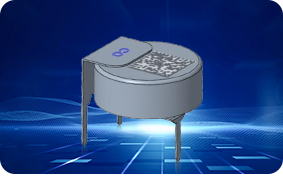
As lithium-ion battery energy storage systems (BESS), AI data centers, hydrogen infrastructure, and industrial safety applications rapidly evolve, the role of gas detectors is transforming—from conventional on-site alarm devices into critical data inputs for risk control, safety interlocking, and operational decision-making frameworks.
In equipment selection and technical specifications for industrial projects, "explosion-proof certification" has traditionally been one of the key indicators for evaluating gas detectors.
However, a question worth further examination is:
Does explosion-proof certification mean that the gas measurement performance of the detector has also been independently verified?
The answer is not necessarily.

Taking UL 1203 and UL 60079-29-1, which are commonly referenced in the North American market, as examples, the two standards address different dimensions within the gas detection safety framework:
UL 1203 primarily addresses the question: "Can the equipment be safely installed in the appropriate hazardous location?"
UL 60079-29-1 further addresses: "Can the equipment reliably detect and measure flammable gases as required?"
For BESS, AI data centers, hydrogen, and high-reliability industrial applications, understanding the distinction between these two dimensions is a critical foundation for establishing a comprehensive technical evaluation system for gas detection.
I. UL 1203: Focused on Equipment Safety in Hazardous Locations
The core purpose of UL 1203 is to evaluate the explosion-proof construction and ignition risk of electrical equipment for use in hazardous locations.
Its applicability extends beyond gas detectors to include a wide range of electrical equipment installed in classified hazardous areas.
For equipment employing explosion-proof construction, the underlying safety logic is:
Even if an internal condition could potentially ignite a flammable mixture, the equipment must, in accordance with applicable requirements, contain the effects and prevent the equipment from becoming an ignition source in the external hazardous environment.
Therefore, for gas detectors, UL 1203 primarily answers:
Can this equipment be safely installed and operated in the applicable hazardous location?
This is a critically important layer of protection within the industrial safety framework.
However, it is not the same as another key question:
Can this detector accurately and reliably measure the target gas over the long term?
The latter falls within the domain of gas detection performance and long-term reliability, which is not the primary certification purpose of UL 1203.
II. UL 60079-29-1: Focused on the Gas Detection Safety Function Itself
The focus of UL 60079-29-1 is notably different.
This standard addresses the performance requirements for apparatus for the detection and measurement of flammable gases or vapors. Its evaluation scope extends beyond the equipment itself to the core safety function that the gas detector performs:
When a hazardous gas appears, can the detector complete the detection, measurement, indication, and output in accordance with the corresponding requirements?
Thus, compared to the explosion-proof attributes of the equipment, UL 60079-29-1 more directly addresses the performance of the gas detection function itself.
To summarize in two sentences:
UL 1203: Can the equipment safely operate in a hazardous environment?
UL 60079-29-1: Can the equipment reliably detect and measure flammable gases in a hazardous environment?
These address different safety dimensions and are not simply interchangeable.
III. From "Equipment Safety" to "Detection Performance": A Dual Perspective Is Required for Industrial Gas Detection
For industrial safety, a complete gas detection system must simultaneously answer two questions:
First, is the equipment itself safe?
When installed in areas with potential flammable gas or vapor risks, the equipment must not become a new ignition source.
Second, is the safety function performed by the equipment reliable?
When a hazardous gas actually appears, the detector must identify the risk in a timely and accurate manner, and provide credible concentration data or alarm signals to the control system.
These two questions may appear similar, but they actually represent two distinct safety logics:
Installation Safety
versus
Detection Performance
For gas detection equipment that performs critical safety functions, both are indispensable.
IV. Why Do BESS and AI Data Centers Particularly Need to Focus on "Quantitative Measurement"?
In traditional industrial scenarios, gas detectors have often primarily served on-site alarm functions.
However, as BESS, AI data centers, and other new infrastructure types rapidly develop, gas concentration data are increasingly being incorporated into system-level safety controls, such as:
Ventilation activation → Graded alarming → System interlocking → Energy isolation → Fire response → Operations and maintenance decisions
This means that the gas detector output is no longer simply:
"Gas present / Gas not present"
but may become a quantitative input parameter that directly influences the next action of the safety system.
Taking a 0–100% LEL flammable gas detector as an example:
10% LEL, 20% LEL, and 25% LEL are not merely three different displayed numbers.
If the system design maps different concentration levels to different control strategies, then the detector's:
Measurement error, response speed, long-term drift, and environmental adaptability
may all further affect the judgment and actions of the entire safety system.
Therefore, for such high-reliability applications, an increasingly important technical requirement is:
The gas detector must not only detect the risk, but also reliably tell the system—exactly what the risk level is.
This is one of the reasons why "quantitative gas measurement" is gradually becoming a key evaluation metric in technical specifications for BESS, data centers, and other critical infrastructure.
V. Explosion-Proof Construction May Be Reliable, but Sensor Performance Is Not Always Reliable
Industrial gas detectors have a reliability characteristic that is easily overlooked:
The equipment enclosure, power supply, and electronic systems may remain intact, but the performance of the core gas sensor may have already changed.
During long-term operation, factors that may affect sensor performance include:
1. Long-Term Drift
Over extended operating periods, the zero point or sensitivity of certain gas sensing technologies may gradually shift.
Therefore, traditional industrial gas detectors typically rely on periodic calibration, functional testing, or sensor replacement to maintain the required detection performance.
2. Temperature Effects
BESS containers, outdoor energy storage cabinets, data center UPS areas, and industrial sites are not consistently in stable laboratory environments.
Different gas sensing technologies have varying degrees of sensitivity to high temperatures, low temperatures, and rapid temperature changes.
Therefore, beyond simply focusing on the "temperature range within which the equipment can be powered on," whether reliable measurement performance can be maintained across wide temperature conditions is of greater concern.
3. Humidity Effects
Humidity variations may affect the output stability and long-term performance of certain gas sensing technologies.
For safety equipment operating over extended periods, often in unattended conditions, this factor must be incorporated into lifecycle reliability evaluations.
4. Cross-Interference
Real industrial environments rarely present the ideal condition of "only one target gas present."
VOCs, solvent vapors, other flammable gases, and environmental contaminants may all affect different gas sensing technologies to varying degrees.
Therefore:
Producing an output does not mean accurately identifying the target risk.
5. Sensor Poisoning and Contamination
This is one of the particularly noteworthy issues in the lifecycle reliability of industrial gas detection.
Certain sensing technologies may be affected by specific chemical substances, resulting in gradual sensitivity degradation.
What is even more concerning is:
Some sensor performance degradation may not be accompanied by obvious equipment failure.
The equipment may still be powered, still communicating, and even continuously outputting concentration data—but its actual gas response capability may have already changed.
Therefore, in long-term industrial safety systems, the anti-poisoning, anti-contamination, and long-term stability of sensors should not be treated merely as individual sensor parameters, but rather incorporated into the lifecycle risk management framework of the entire detection system.
VI. Why Do BESS Environments Particularly Require Attention to Sensor Poisoning and Contamination?
The interior of a BESS is not simply a confined space containing only batteries.
A complete energy storage system typically also includes numerous other materials and components, including:
Sealing materials, gaskets, thermal interface materials, potting compounds, coatings, adhesive materials, cables, and other polymeric materials.
At the same time, during long-term operation, the system may continuously experience:
Temperature variations, charge/discharge cycling, air exchange, and material aging.
This means that gas sensors deployed inside a BESS must contend with not only the target gas itself, but also a more complex real-world environment.
For gas detection systems performing long-term safety monitoring functions, technology selection requires comprehensive consideration of:
Target gas response + Environmental interference + Chemical contamination + Long-term drift + Temperature and humidity adaptability
Therefore, the evaluation focus of modern industrial gas detection technologies is shifting from simply considering "initial accuracy" at the time of commissioning toward:
Effective detection capability over the full lifecycle.
VII. From "Periodic Calibration" to "Longer-Term Stable Operation"
Traditional industrial gas detection systems have typically relied on periodic maintenance to manage long-term performance risks, including:
Bump Test → Calibration → Sensor Replacement → Preventive Maintenance
This maintenance model has long been an important component of industrial safety management systems.
However, with the rapid deployment of BESS, AI data centers, and other large-scale infrastructure, the long-term maintenance costs are drawing increasing attention.
Assuming a large project deploys hundreds or even thousands of gas detection points—even if each individual maintenance event requires only limited time—the cumulative long-term:
Labor costs, downtime coordination, calibration gases, site access, maintenance records, and human operational risks
may still constitute a significant lifecycle cost.
Therefore, one of the key development directions for next-generation gas sensing technologies is the continuous improvement of:
Long-term stability, anti-poisoning capability, interference resistance, wide-temperature performance, and low-drift characteristics
thereby further extending maintenance intervals and reducing system dependence on frequent manual maintenance.
It should be emphasized that this does not mean all gas detectors can be maintenance-free.
More precisely, the industry is evolving from:
"Relying on frequent maintenance to sustain reliability"
toward:
"Reducing maintenance dependence through higher sensing technology reliability."
VIII. Gas Detector Selection Is Entering a "Four-Dimensional Evaluation" Phase
For BESS, AI data centers, hydrogen, and other high-reliability industrial projects, simply asking:
"Does this detector have explosion-proof certification?"
is no longer sufficient to fully evaluate the technical capability of a gas detection solution.
A more systematic evaluation framework should include at least the following four dimensions:
01|Installation Safety
Does the equipment meet the required hazardous location classification and corresponding certification requirements for the project?
Standards such as UL 1203 primarily address this dimension.
02|Detection Performance
Have key performance aspects—gas detection, concentration measurement, response, indication, and output—been independently evaluated in accordance with applicable standards?
Gas detection performance standards such as UL 60079-29-1 primarily address this dimension.
03|Application Reliability
Is the sensing technology employed by the equipment truly suitable for the intended application environment? Have the sensor's anti-silicon-poisoning and high-temperature endurance capabilities been independently verified by a professional international third-party organization?
Further evaluation should address:
High temperature, low temperature, humidity, cross-interference, environmental contamination, sensor poisoning, and target gas characteristics.
04|Lifecycle Reliability
After several years of operation, can the equipment still maintain the detection capability required by the project?
Further attention should be given to:
Long-term drift, calibration intervals, sensor service life, maintenance cycles, and potential failure modes.
Together, these four dimensions constitute a more complete reliability evaluation framework for modern industrial gas detection systems:
Installation Safety × Detection Performance × Application Reliability × Lifecycle Reliability
IX. From "Equipment Compliance" to "Trustworthy Safety Function"
Industrial gas detection is undergoing a significant transformation.
In the past, project focus was often primarily on:
"Does the equipment have the appropriate certification?"
Today, in BESS, AI data centers, hydrogen, and other critical infrastructure, an increasing number of high-reliability projects require an additional question to be answered:
"Is this safety function truly trustworthy?"
The distinction between UL 1203 and UL 60079-29-1 precisely reflects these two different safety evaluation dimensions.
UL 1203 addresses whether the equipment can be safely installed and operated in the applicable hazardous environment;
UL 60079-29-1 further addresses whether the equipment can reliably perform the flammable gas detection and measurement function.
For BESS, AI data centers, and other critical infrastructure, engineering evaluation must take yet another step forward:
Not only whether the equipment "can be installed," but also whether it "measures accurately";
Not only whether it meets requirements at commissioning, but also whether it remains reliable after years of operation.
Thus, the competitive dimensions of industrial gas detection technology are extending from traditional explosion protection and equipment compliance toward:
Precise quantitative measurement, anti-poisoning, interference immunity, low drift, wide-temperature environmental adaptability, and full-lifecycle reliability.
For gas detection systems performing critical safety functions, what truly matters is not merely obtaining a certification, but establishing safety credibility throughout the entire equipment lifecycle:
From installation safety, to detection performance, to long-term operation—ensuring that the safety function remains trustworthy throughout its full lifecycle.
Prosense Gas Sensing Solutions Specifically Designed for AI Data Center Lithium-Ion Battery Applications
As a leading provider of advanced gas sensor R&D and manufacturing, Prosense starts from the real-world complexities of the field and continues to drive technological breakthroughs and international compliance progress in data center lithium-ion battery application scenarios.
The company's hydrogen sensor series products have obtained UL 2075 certification for the US and CAN/ULC 588 certification for Canada, with an operating temperature range covering -40°C to 105°C. They have become industry benchmarks in environmental adaptability, long-term stability, anti-silicon poisoning, and reliability, and have been widely deployed in energy storage system safety monitoring, AI data center infrastructure, and new energy-related applications.
Advanced gas sensing solutions include:
- Low-level and multi-level hydrogen detection with system interlocking: Enables multi-level hydrogen detection at low concentration (500 ppm), 10% LFL (4,000 ppm), and 25% LFL (10,000 ppm), integrated with Battery Management Systems (BMS) and safety control strategies.
- Anti-contamination and anti-silicon poisoning design: Effectively reduces chemical coating of sensing elements by interferents such as VOCs and siloxanes, enhancing hydrogen and CO sensor stability in long-term high-contamination environments.
- High-temperature performance optimization: Meets the continuous detection requirements of energy storage facilities under pre-commissioning enclosed cabinet conditions and high-temperature operation.
- Lifecycle stability enhancement: Extends effective sensor operating life, reducing on-site replacement frequency, maintenance needs, and drift risks.
About Prosense
Prosense is a high-tech enterprise specializing in the R&D and manufacturing of advanced gas sensors, committed to providing global customers with high-performance, high-reliability sensing solutions. The company continues to invest in core technology R&D, tackling critical industry challenges and steadily leading the development direction of gas sensing technologies. With innovative products and exceptional quality, Prosense is progressively emerging as a significant driver and leader in the global gas safety monitoring sector.
Prosense adheres to a full-stack in-house R&D approach, having established a kilogram-level catalyst development base for gas sensors and an automated production and aging/calibration system with an annual output of tens of millions of gas sensors. Its product portfolio covers toxic, hazardous, combustible, explosive, and environmental gas detection applications. Multiple innovative products from Prosense have become core sensing components in vertical markets such as smart fire protection, industrial safety, and energy storage safety.