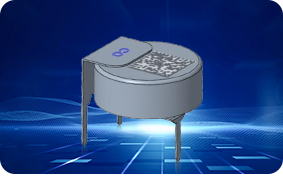
From International Standards to Global Markets – Establishing a Unified Performance Evaluation Framework
As products become increasingly globalized, more and more manufacturers seek to meet regulatory requirements across different countries and regions through unified platform designs. International standard systems are emerging as a critical foundation for achieving this goal. The international flammable gas detector performance standard systems, represented by IEC 60079-29-1, EN 60079-29-1, and UL 60079-29-1, are progressively forming a mutually aligned and complementary development landscape. For manufacturers targeting global markets, understanding the relationships among these standards not only facilitates product development and performance verification but also enhances the efficiency of global market access.
Currently, the performance evaluation of explosion-protected flammable gas detectors primarily involves three standard systems:
- IEC 60079-29-1:2016+AMD1:2020 – An international standard published by the International Electrotechnical Commission (IEC), providing the technical foundation for global flammable gas detector performance evaluation.
- BS EN 60079-29-1:2016+A11:2022 – A European harmonized standard that, while maintaining substantial technical alignment with IEC, incorporates European regulatory frameworks and relevant harmonized standards for application in the European market.
- UL 60079-29-1, Last Revision: October 02, 2023 – A standard adopted in North America that, while leveraging the IEC technical framework, incorporates corresponding national differences to align with North American regulatory and application requirements.
For North American standards (such as UL, CSA, NEC), the term LEL (Lower Explosive Limit) is commonly used, while IEC and EN standards typically use LFL (Lower Flammable Limit). Both terms essentially refer to the same concept; the distinction lies solely in the terminology adopted by different standard systems.
Although these three standards apply to different markets, their common objective is consistent – to establish a unified, scientific, and reproducible performance evaluation system that ensures flammable gas detectors can continuously provide accurate and reliable safety protection in real-world industrial environments.
UL, IEC, and EN: Technically Aligned, Differing in Application Focus
IEC 60079-29-1 establishes the international framework for performance requirements and test methods for flammable gas detectors, serving as an important technical basis for product evaluation across numerous countries and regions worldwide.
EN 60079-29-1 serves as a harmonized standard in the European market, incorporating, in addition to performance evaluation, standards such as EN 50270 (Electromagnetic Compatibility) and EN 50271 (Software-controlled functional safety) to meet compliance requirements under relevant European regulations.
UL 60079-29-1, while adopting the IEC technical framework, incorporates additional national differences based on North American market characteristics. For example, when a manufacturer claims the device's performance under dustproof and waterproof conditions, corresponding performance verification in accordance with UL requirements is necessary. Additionally, requirements such as fault verification are also key focus areas within the UL standard.
For gas detector manufacturers, an increasing number of companies are choosing the IEC technical framework as the foundation for product development, then supplementing with national or regional requirements from EN or UL to achieve a "one development, multiple markets" product development model.
Key Technical Focus: Gas Sensor Selection
In the compliance framework for industrial and commercial gas detectors, gas sensor performance directly determines the overall product certification and long-term reliability outcomes. UL 60079-29-1 establishes a comprehensive evaluation system covering overall product performance, including:
- Measurement accuracy and calibration performance
- Response time and alarm functionality
- Response characteristics to different flammable gases
- Environmental adaptability including temperature cycling, vibration, and drop tests
- Electromagnetic compatibility (EMC) performance
- Software control functionality
- Fault monitoring and fault indication capabilities
Additional Requirements for Semiconductor and Catalytic Bead Sensors
Given that semiconductor and catalytic bead gas sensing technologies may be affected by environmental factors, contaminants, and sensing material aging during long-term operation, international standards have incorporated additional long-term stability verification requirements for equipment employing these technology platforms. These requirements assess the product's ability to maintain sustained performance and alarm capability under specified aging conditions.
The equipment should be continuously exposed to a test gas concentration of 45% to 55% of the full-scale range for a duration of 60 minutes. During the test, the indicated value variations are continuously recorded to evaluate:
- Whether zero drift occurs
- Whether sensitivity drift occurs
Key Observation Items
This test is typically used to identify:
- Measurement errors
- Abnormal responses at specific concentrations
- Drift after prolonged exposure
- False alarms
Notably, this stability verification primarily applies to equipment employing semiconductor and catalytic bead sensing technologies. Different sensing technologies, due to their distinct detection principles, are subject to different performance evaluation requirements. This reflects the international standards' approach of establishing targeted performance verification systems based on different technological characteristics.
The IEC/EN/UL 60079-29-1 evaluation scope covers typical operating conditions that equipment may encounter from laboratory testing to long-term field operation, reflecting the international standards' focus on overall product performance and long-term reliability.
For gas detector manufacturers seeking to simultaneously enter international markets including Europe, the Americas, the Middle East, and Southeast Asia, particularly in high-value-added vertical industries, selecting sensor solutions with multi-scenario compliance capability and proven engineering verification foundations is a critical prerequisite for reducing certification risks, achieving product differentiation, and accelerating time-to-market.
Prosense Advanced Gas Sensing Solutions for Industrial Critical Applications
As an enterprise dedicated to the R&D and manufacturing of advanced gas sensing technologies, Prosense consistently focuses on critical industrial application scenarios, continuously advancing core sensing material innovation, product performance enhancement, and international standards compliance to deliver more reliable gas sensing solutions to global customers.
Carbon Monoxide and Hydrogen Sensing Platforms for Industrial Critical Applications
Prosense's next-generation carbon monoxide (CO) and hydrogen (H₂) sensor series, developed for industrial applications, have obtained UL 2075 and CAN/ULC-S588 certifications, with an operating temperature range of -40°C to 105°C, meeting the long-term stable operation requirements of complex industrial environments.
The products have been comprehensively optimized for the long-term operational characteristics of industrial sites, with continuous improvements in environmental adaptability, long-term stability, anti-silicon-poisoning capability, and low-maintenance design, providing more reliable gas sensing capability for critical industrial facilities.
Anti-Contamination and Anti-Silicon Poisoning Design
Optimized for volatile organic compounds (VOCs), siloxanes, and other potential contaminants found in industrial environments, effectively reducing the long-term impact of contaminants on sensing element performance and enhancing the long-term stability of carbon monoxide and hydrogen sensors in complex environments.
Wide-Temperature Environmental Adaptability
With an operating temperature range of -40°C to 105°C, the products meet the application requirements for continuous operation of industrial equipment under high-temperature, low-temperature, and complex environmental conditions.
Full-Lifecycle Stability
Optimized for long-term continuous operation scenarios, continuously improving sensor long-term stability, reducing on-site maintenance frequency, measurement drift, and lifecycle operating costs.
Product Development Aligned with International Standards
Product development fully considers the requirements of international industrial gas detection standards, providing reliable sensing technology support for global customers' product certifications and international market applications.
H₂S Safety Monitoring Platform for Future Battery Technologies
With the rapid development of solid-state batteries and next-generation battery technologies, hydrogen sulfide (H₂S) safety monitoring is progressively becoming a critical safety measure in battery manufacturing, storage, transportation, and application processes.
Prosense's FC0-H2S-100 hydrogen sulfide sensor, specifically developed for solid-state battery industry applications, employs proprietary core material technologies and has undergone reliability optimization in line with new energy industry application requirements. It can be widely applied to:
- Safety monitoring during solid-state battery material production processes
- Leakage monitoring in solid-state battery manufacturing production lines
- Safety monitoring for solid-state battery warehousing and logistics
- Ultra-early warning of battery thermal runaway
- H₂S safety monitoring for new energy vehicles
- Operational safety management for solid-state energy storage systems
Leveraging patented core material technologies and extensive technical expertise in the new energy safety field, the product incorporates automotive-grade reliability design concepts, with comprehensive optimization in long-term stability, complex environmental adaptability, and anti-contamination capability, delivering long-term reliable gas sensing capability for global solid-state battery customers.
International Standards Focus on Sustained Reliability, Not Merely Passing a Single Test
From the evolution of the standard systems, it is evident that international performance evaluation has moved beyond simply assessing whether a product can detect flammable gases—it now focuses on whether the product can consistently maintain stable performance throughout its entire lifecycle.
Consequently, international standards place greater emphasis on factors that may affect the product during long-term operation, including ambient temperature, mechanical vibration, electromagnetic interference, airflow, and equipment faults, systematically verifying product reliability in complex industrial environments through comprehensive performance testing.
For manufacturers, this means that product development must not only meet one-time certification testing requirements but also establish a reliability assurance system covering the entire product lifecycle—from design and verification to manufacturing and quality management.
Emerging Trends in International Standards
With the rapid development of new energy, battery energy storage systems (BESS), hydrogen energy, data centers, and industrial digitalization, the application scenarios for explosion-protected flammable gas detectors continue to expand, and the industry is imposing higher performance requirements on products.
Against this backdrop, the development of the international standard system reveals several noteworthy trends:
- Long-term maintenance-free operation in vertical application scenarios (data centers/energy storage systems)
- Focus on long-term stability and full-lifecycle performance
- Emphasis on environmental adaptability in complex industrial environments
- Attention to fault diagnostics and functional integrity
- Promotion of global product platform development to enhance product consistency and global market adaptability
From the IEC international standard, to the EN European harmonized standard, to the UL North American adopted standard, the global performance standard system for explosion-protected flammable gas detectors is continuously maturing—providing manufacturers with a unified product development framework and establishing a more scientific and reliable technical foundation for global industrial safety.
The value of international standards is not only reflected in meeting market access requirements, but more importantly, in driving products from meeting functional requirements toward long-term reliable operation through a unified, reproducible performance evaluation system. For manufacturers targeting global markets, building product design, performance verification, and quality management systems based on international standards will help enhance product consistency, strengthen global competitiveness, and provide more reliable technical support for industrial safety.
About Prosense
Prosense is a high-tech enterprise specializing in the R&D and manufacturing of advanced gas sensors, committed to providing global customers with high-performance, high-reliability sensing solutions. The company continues to invest in core technology R&D, tackling critical industry challenges and steadily leading the development direction of gas sensing technologies. With innovative products and exceptional quality, Prosense is progressively emerging as a significant driver and leader in the global gas safety monitoring sector.
Prosense adheres to a full-stack in-house R&D approach, having established a kilogram-level catalyst development base for gas sensors and an automated production and aging/calibration system with an annual output of tens of millions of gas sensors. Its product portfolio covers toxic, hazardous, combustible, explosive, and environmental gas detection applications. Multiple innovative products from Prosense have become core sensing components in vertical markets such as smart fire protection, industrial safety, and energy storage safety.