On April 24th, the energy storage market in the Middle East was completely ignited by a heavyweight news. Saudi Power Procurement Company (SPPC) has officially launched the second batch of qualification pre qualification for large-scale battery energy storage projects, launching six independent energy storage projects at once with a total scale of up to 3GW/12GWh.
This not only means that the energy storage market in the Middle East has entered an accelerated explosive period, but also that the global energy storage system is ushering in a new era of "extreme environmental security challenges".
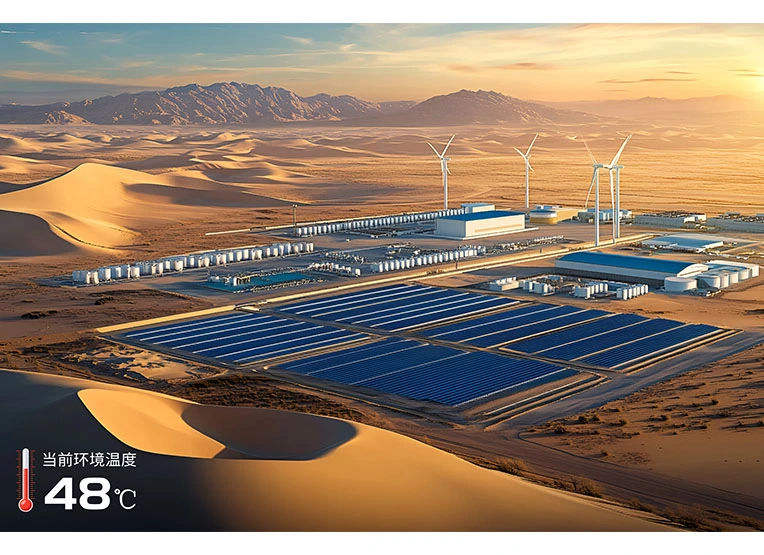
Especially in the Middle East regions such as Saudi Arabia and the United Arab Emirates, the long-term summer ambient temperature exceeds 45 ℃, which poses unprecedented challenges to the thermal management and thermal runaway warning capabilities of energy storage systems (BESS) due to the combination of strong solar radiation, low wind speed, and high load operation.
How hot is the energy storage system in the high-temperature environment of the Middle East?
Without special insulation design or active cooling measures, the temperature of the energy storage system casing often far exceeds the external ambient temperature.
External surface temperature of energy storage box: 70 ℃ to 80 ℃

The strong direct solar radiation in the Middle East region will cause the metal shell to continuously absorb heat. Especially for dark colored boxes, which do not use high reflective insulation coatings and are exposed to sunlight for a long time, the surface temperature of the box is usually 25 ℃~35 ℃ higher than the ambient temperature, and in extreme cases, it may even approach 85 ℃
This is far beyond the long-term reliable operating range of most electronic components.
Air temperature inside the energy storage box: 55 ℃ to 65 ℃

When the energy storage system is in a shutdown state/air conditioning failure/insufficient natural ventilation, a typical "greenhouse effect" will quickly form inside the container. After the continuous accumulation of heat, the air temperature inside the energy storage system box can easily exceed 55 ℃, and some areas can even exceed 65 ℃. However, the safe storage temperature limit for most lithium batteries and electronic devices is usually around 60 ℃
This means that the energy storage system may have been in a high-risk thermal environment for a long time before it is operational.
Core area temperature during system operation: 65 ℃ to above 90 ℃

During high rate charging and discharging, the internal resistance of the battery heats up, the PCS bidirectional converter heats up, or the transformer continues to generate heat, all of which can cause a sharp rise in the internal temperature of the system. When the external environment itself approaches its limit, the heat dissipation efficiency will significantly decrease.
Ultimately, there may be high-frequency derating operation, continuous full load of air conditioning, rapid deterioration of battery life or chain propagation of thermal runaway, and even serious energy storage safety accidents.
What new requirements have been put forward for gas detectors and gas sensors in the Middle East energy storage project?
In the ultra-high temperature energy storage environment, traditional civilian and commercial grade gas sensors are no longer able to meet the requirements. The industry is paying more attention to:
1. Wide Operating Temperature Range
The sensor needs to be maintained at temperatures ranging from -40 ℃ to 85 ℃ or 105 ℃, or even higher
Compensation stability
Stable sensitivity
Long term low drift
Otherwise, false positives, false negatives, sensitivity drift, and failure are highly likely to occur at high temperatures.
2. High temperature lifespan and long-term reliability
Energy storage projects typically require:
7 × 24-hour continuous operation;
Having a lifespan of over 10 years;
Extremely low maintenance frequency
This means that sensors not only need to be able to 'detect', but also need to be able to detect stably over the long term.
3. Anti silicon poisoning and anti cross interference ability
The internal materials of the energy storage system are complex:
sealant
coating
insulating material
Electrolyte volatiles
All of them may cause poisoning or cross interference to the sensor. Therefore, resistance to silicon poisoning and cross interference are gradually becoming important evaluation indicators for international energy storage projects.
International energy storage projects are facing new industry pain points
As more and more energy storage systems begin to deploy gas detectors, the industry is also experiencing another seriously underestimated problem: the failure of gas sensors in complex energy storage environments
Previously, a large number of international energy storage projects have emerged in the long-term operation process
Sensitivity drift of gas sensor
Failure under high temperature environment
Long term false alarm
Long term underreporting
Sensor poisoning failure
Especially: Silicon Poisoning
A large amount of sealant, silicone material, protective coating, and insulation material are used inside the energy storage system, which will continuously release silicone volatile compounds in long-term high temperature environments. These substances will gradually cover the catalytic active layer of the sensor, resulting in:
Sensitivity attenuation
Slow response
Ultimately completely ineffective
Ester poisoning
Electrolytes, cleaning agents, industrial volatiles, and insulation materials inside some energy storage systems may release complex ester organic compounds. In a high-temperature sealed environment, these pollutants accumulate over a long period of time, causing irreversible damage to sensors.
Dual challenges of high temperature and complex gas environment
The interior of the energy storage box is not a normal air environment, but a long-term existence:
Electrolyte volatiles
VOCs
Plastic volatiles
silicone
High humidity and heat environment
Trace corrosive gas
Overlay: High temperature operating conditions ranging from 65 ℃ to 90 ℃. This has led to rapid aging, severe sensitivity drift, sudden decline in service life, and failure of many traditional civilian, commercial, and grade gas sensors in energy storage scenarios.
Neglected risk: Many energy storage projects do not truly understand the "limiting conditions" of gas detectors
It is worth noting that many energy storage system integrators and fire protection integrators pay more attention to:
Has certification been obtained
Does it have detection function
• Whether the initial sensitivity is met
But they overlooked the key limiting conditions in the gas detector specifications and warning instructions. In fact, many gas detectors are clearly labeled in the instruction manual as follows:
• Silicone Poisoning
• Solvent Exposure
• Ester Contamination
• Corrosive Gas Exposure
Warning content such as High Temperature Degradation.
These warnings typically indicate that sensors may become poisoned, drift, or even permanently ineffective in specific complex environments. And energy storage systems precisely belong to:
high temperature
enclosed
High VOC
High volatile matter
A typical complex industrial environment that operates continuously for a long time.
International standards have emphasized the disclosure of risks of poisoning failure
At present, the international standard system has increasingly emphasized the long-term reliability of gas detectors in complex scenarios, including international standard systems such as FM 6540 and UL 2075, which particularly emphasize:
Manufacturers must clearly list in the product specification manual:
What chemicals may cause sensor poisoning
Which scenarios may lead to performance failure
Which environments may cause sensitivity drift
Under what conditions is it not suitable for long-term use
FM 6540 requires manufacturers of energy storage gas detectors to provide a list of substances that can cause poisoning and failure of gas detectors due to thermal runaway of energy storage. This means that "certification of gas sensors and gas detectors" does not necessarily mean "applicable to all energy storage scenarios".
The energy storage system has put forward engineering requirements for gas detection technology that are higher than the general standards. In such highly complex applications, sensor selection should not be based solely on whether it has passed UL 2075/FM certification, but should be comprehensively evaluated for its anti-interference ability, anti poisoning ability, long-term stability in a wide temperature range environment, and full lifecycle cost in complex environments.
The real key to product selection is:
Do you understand the limitations of gas sensors and gas detectors
Do you understand the long-term pollution risks in energy storage environments
Does it have the ability to resist poisoning optimized for energy storage scenarios
The energy storage industry has seen huge compensation cases
In some international energy storage projects, the long-term failure or false alarm of gas detectors has led to frequent system shutdowns, fire safety malfunctions, energy storage system derating, project acceptance failures, and loss of O&M maintenance costs. Some energy storage system integrators and fire protection integrators have even suffered huge compensation and project claims from buyers.
Regulatory agencies and industry stakeholders have realized that "limited testing under laboratory conditions" and "long-term stable testing in real application scenarios" are completely different concepts.
ProSense is a gas sensing solution specifically designed for energy storage applications
The world's first cRUus certified all solid state electrolyte carbon monoxide and hydrogen sensor specially customized for energy storage safety
As an industry leader in the research and manufacturing of advanced gas sensors, ProSense continues to promote technological breakthroughs and international compliance processes in the field of energy storage applications, starting from complex on-site environments. The company's hydrogen and carbon monoxide sensor products have obtained UL 2075 certification in the United States and CAN/ULC 588 certification in Canada. The working temperature range of the products covers -40 ℃ to 105 ℃, and they have become industry benchmarks in terms of environmental adaptability, long-term stability, resistance to silicon poisoning, and reliability. They have been widely used in energy storage system safety monitoring, AIDC infrastructure, and new energy related scenarios. Gas sensing solutions include:
Anti pollution and anti silicon poisoning design: effectively reduces the chemical coverage of sensitive components by interfering substances such as VOCs and siloxanes, and improves the stability of hydrogen and CO sensors in long-term high pollution environments.
• High temperature performance optimization: Meet the continuous testing needs of energy storage facilities under closed energy storage cabinets and high temperature operating conditions before operation.
• Improved lifecycle stability: Extend the effective operating cycle of sensors, reduce the risk of frequent on-site replacement, maintenance, and drift.
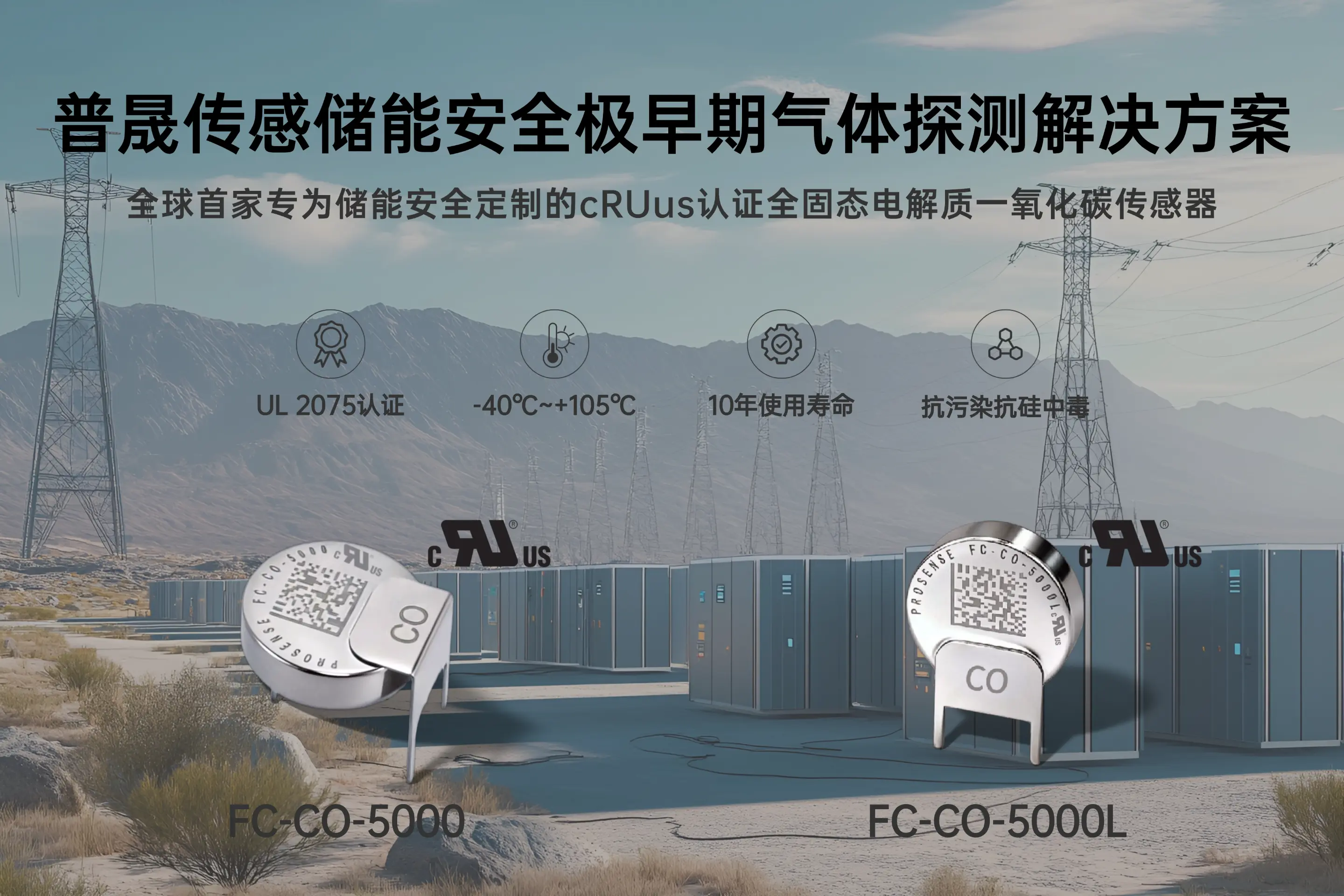
FC-CO-5000/FC-CO-5000L Carbon Monoxide Sensor
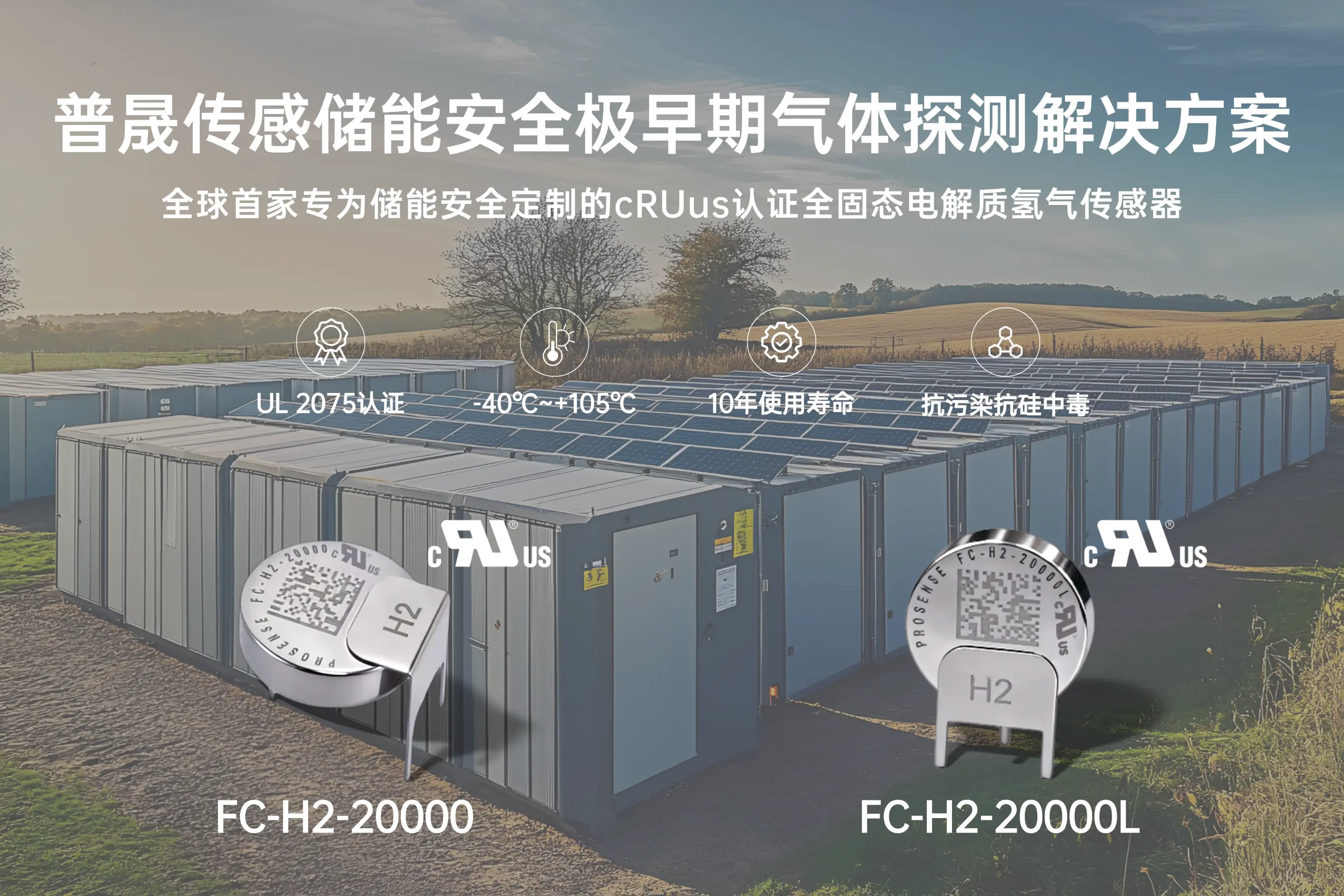
FC-H2-2000/FC-H2-20000L Hydrogen Sensor
The technological path of ProSense not only focuses on compliance, but also emphasizes the anti-interference ability and reliable operation ability of gas sensors in real energy storage field environments, improving the early warning efficiency and overall safety guarantee level of the system from the source.
Conclusion: From Consciousness to Action - Building a Safer Energy Storage Future
The effective gas detection system in the early stage of thermal runaway is one of the foundations of energy storage safety architecture. With the advancement of industry standardization, the continuous formation of global consensus, and the accumulation of actual failure cases on site, sensor reliability is becoming an important factor affecting the safety of energy storage systems.
Choosing sensors with anti-interference, silicon poisoning resistance, high temperature tolerance, and long-term stability is no longer a technical overflow requirement, but a basic requirement for energy storage safety design. Only by improving the environmental adaptability and lifecycle reliability of detection devices from the source can we truly implement risk warning and safeguard the global energy transition and AI data centers.
About ProSense
ProSense is a high-tech enterprise dedicated to the research and manufacturing of advanced gas sensors, committed to providing high-performance and high reliability sensing solutions for global customers. The company continues to invest in core technology research and development, overcome key pain points in the industry, and continuously lead the development direction of gas sensing technology. With innovative products and excellent quality, ProSense is gradually growing into an important promoter and leader in the global gas safety monitoring field.
ProSense adheres to the full stack self-developed technology route, and has established a kilogram level gas sensor catalyst research and development base and an automated production aging calibration system for millions of gas sensors per year. Its product line covers the fields of toxic and harmful, flammable and explosive, and environmental gas detection; Pu Sheng Sensing's multiple innovative products have become core sensing components in vertical fields such as smart firefighting, industrial testing, and energy storage safety.