Provide a solid foundation for energy storage hazard mitigation analysis and safety measure effectiveness verification through reliable battery exhaust identification, environmental adaptability, and continuous monitoring capabilities
With the development of battery energy storage systems towards higher capacity and more compact structures, safety design needs to answer a key question: can the system identify abnormal gas releases in a timely manner and convert detection signals into effective risk control actions?
On December 23, 2024, the Italian Ministry of the Interior's Fire Department issued Circular No. DCPERV 21021, attaching the "Guidelines for the Design, Construction, and Operation of Battery Energy Storage Systems". The guidelines explicitly include battery exhaust detectors in the BESS safety configuration and link gas detection with safety and fire protection systems.

For equipment manufacturers, system integrators, and operators, the engineering value of this requirement lies in implementing "configured detectors" as verifiable anomaly identification capabilities, enabling gas monitoring to provide reliable basis for risk assessment and subsequent disposal.
Clear detection target: extending from battery cell exhaust recognition to safety response
Section 1.2.19 of Part I of the guidelines defines Off Gasses as gaseous products released from the exhaust of a battery cell, and explicitly states that this includes hydrogen gas.
Section 2.12 of Part I further states that the detector should quickly and effectively identify these products and be connected to safety and fire protection systems.
Therefore, the detection plan should be validated around the actual risk identification targets: what gases need to be identified, at what stage, how long can they be identified, and what actions should be taken after identification.
Understanding technical requirements: incorporating detection configurations into risk analysis
The requirements directly related to gas detection in the guidelines mainly include the following content.

Interpretation Document No. 9467 of June 5, 2025 further clarified issues such as BESS Island, safety distance, and fire partition walls.
The value of low concentration and multi-stage hydrogen concentration detection and alarm strategies in the safety management of energy storage systems
Accurate and reliable linkage of fans can be achieved in the very early stages of thermal runaway and gas release, which can avoid the accumulation of large amounts of combustible gases and the failure of linked fans caused by cascading thermal runaway, thus achieving the goal of effective risk control.
Integrating multi-level hydrogen concentration detection and alarm strategies for low concentration (500ppm), 10% LFL (4000ppm), and 25% LFL (10000ppm) with battery management systems (BMS) and safety control strategies can achieve:
Timely intervention: Before the formation of a dangerous situation, activate forced ventilation, isolate abnormal modules, or stop charging and discharging operations.
Improve operational safety: Reduce the risk of thermal runaway spreading between cells or modules through early intervention.
Data driven decision-making: providing actionable basis for predictive operations, risk assessment, and compliance with industry safety standards.
As an important front line for the safety management of energy storage systems, low concentration hydrogen detection can significantly enhance the overall resilience and long-term operational reliability of the system, providing reliable safety guarantees for the energy storage industry.
Based on the above background, relying solely on ventilation systems or alarm strategies based on high concentration gases often makes it difficult to respond promptly to rapidly developing thermal runaway processes. In this case, introducing low concentration hydrogen gas alarm as a pre sensing means is of great significance.
Low concentration and multi-stage hydrogen detection shift energy storage systems from "passive response" to "active prevention" by advancing safety strategies to the early stages of risk, becoming a key technological path to enhance system safety, reliability, and business continuity.
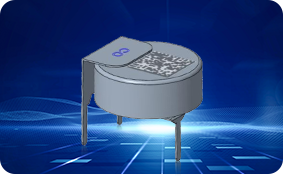
ProSense is a gas sensing solution specifically designed for energy storage systems and AI data center lithium battery scenarios
As an industry leader in the research and manufacturing of advanced gas sensors, ProSense continues to promote technological breakthroughs and international compliance processes in the field of energy storage applications, starting from complex on-site environments.
The company's series of carbon monoxide and hydrogen sensors have become the world's first products to achieve UL silicon poisoning resistance and 85 ° C high temperature reliability certification. The working temperature range of the product covers -40 ℃ to 105 ℃, making it a benchmark in the industry for environmental adaptability, long-term stability, resistance to silicon poisoning, and reliability. It has been widely used in energy storage system safety monitoring, AIDC infrastructure, and new energy related scenarios.
Advanced gas sensing solutions include:
Low concentration and multi-stage hydrogen detection and system linkage
Support 500 ppm low concentration H ₂ warning, as well as multi-level concentration monitoring such as 4000 ppm (10% LEL) and 10000 ppm (25% LEL), providing energy storage systems with graded monitoring capabilities from early anomaly identification to combustible gas risk control.
Low concentration and multi-stage carbon monoxide detection and system linkage
Support multi-level CO concentration detection of 10 ppm, 20 ppm, 120 ppm, etc., providing technical support for battery abnormal exhaust identification, concentration trend monitoring, and graded alarm.
Anti pollution and anti silicon poisoning design
Optimize the anti pollution performance of sensors and enhance measurement stability in complex environments to address the potential presence of siloxanes, VOCs, and other volatile pollutants within energy storage systems.
Wide temperature range and high temperature reliability
Improve the high temperature tolerance and performance maintenance level of sensors in response to temperature changes during transportation, installation, commissioning, and normal operation of energy storage cabinets and containers.
Long lifespan and sustained reliability
By optimizing core materials, sensor structures, and manufacturing processes, long-term measurement stability is improved, and risks of drift, frequent maintenance, and early replacement are reduced.
Reliable perception to support more effective risk decision-making
The Italian BESS guidelines include battery exhaust detection in safety configurations and emphasize its connection with safety and fire protection systems. To implement this requirement, it is necessary to establish a verifiable connection between the detection target, actual performance, and response measures.
Low concentration identification requires reliable measurement support, representative coverage requires engineering verification support, and alarm value requires timely disposal support. Reliable gas sensing can provide a data foundation for hazard mitigation analysis and support the effectiveness verification of safety measures.
Based on advanced gas sensing technology, Pusheng Sensing continues to focus on low concentration detection, environmental adaptability, and long-term reliability. Together with equipment manufacturers and system integrators, it promotes effective integration between international safety requirements and industrial application needs.
ProSense | Simplify Global Compliance
About ProSense
ProSense is a high-tech enterprise dedicated to the research and manufacturing of advanced gas sensors, committed to providing high-performance and high reliability sensing solutions for global customers. The company continues to invest in core technology research and development, overcome key pain points in the industry, and continuously lead the development direction of gas sensing technology. With innovative products and excellent quality, ProSense is gradually growing into an important promoter and leader in the global gas safety monitoring field.
ProSense adheres to the full stack self-developed technology route, and has established a kilogram level gas sensor catalyst research and development base and an automated production aging calibration system for millions of gas sensors per year. Its product line covers the fields of toxic and harmful, flammable and explosive, and environmental gas detection; ProSense's multiple innovative products have become core sensing components in vertical fields such as smart firefighting, industrial testing, and energy storage safety.