In the context of the accelerated evolution of the global digital economy and energy structure, data centers and lithium battery energy storage systems (BESS) are rapidly becoming important support points for key infrastructure and strategic capabilities in various countries. At the same time, the systemic risks associated with high energy density and complex operating environments are posing higher standards and deeper challenges to safety monitoring technology, especially in the field of early thermal runaway risk management.
With the joint efforts of multiple international research institutions and leading companies in lithium-ion energy storage systems, Ms. Zhao Li, General Manager and Chief Engineer of ProSense, published a signed English technical article titled "Third party Certified Gas Detector Risks" in the 23rd issue of the internationally authoritative fire safety journal IFSJ (International Fire&Safety Journal).
This study is based on global practical application cases and systematically analyzes the key challenges faced by extremely early gas detectors deployed in data centers and energy storage systems, such as "poisoning failure" and "long-term reliability degradation", in complex environments. It also proposes technical paths and solutions for real-world scenarios.

It is particularly crucial that the international expert group has reached an important consensus in the system review of early energy storage project operation data: in actual operating environments, a large number of gas detectors suffer from "silicon poisoning" and performance failure, which has become one of the core hidden dangers affecting system safety. This type of problem will directly weaken the detector's ability to respond to early characteristic gases of thermal runaway, thereby affecting the effectiveness and credibility of the overall risk warning system.
Based on this global cognitive upgrade, the newly released NFPA 855-2026 standard provides clear guidelines for the selection of gas sensors and detectors in energy storage systems for the first time, emphasizing the need for systematic evaluation of interfering gases, pollutants, and long-term stability based on actual application environments, rather than relying solely on traditional certification test results. This marks a crucial stage for the energy storage safety industry to move from a "certification oriented" to a "scenario driven" approach.

In the above research, ProSense deeply revealed the core technical challenges that affect the reliability of gas detection from the perspective of sensing mechanism and engineering application, including:
The irreversible poisoning mechanism of sensing materials caused by siloxane and volatile organic compounds (VOCs)
Cross sensitivity and false alarm risk in multi gas coupled environments
Performance drift and reliability degradation during long-term operation
Systematic deviation between standard testing conditions and real complex application scenarios
Facing the security requirements of the new generation of data centers and energy storage systems, ProSense has built a system solution system with "long-term reliability" as its core:
Advanced sensing materials and structural design for silicon poisoning resistance
Dynamic compensation algorithm and self calibration mechanism for complex environments
Stability design and verification methods guided by the entire lifecycle
Multi sensor fusion and scene based risk identification capability
Since its publication, this English article has attracted widespread attention from the industry worldwide. The increasing demand for multi-party technical exchanges and cooperation from data center owners, energy storage system integrators, and equipment manufacturers fully reflects the urgent expectation of the market for high reliability gas detection technology, and further verifies the forward-looking and practical value of the ProSense technology path.
As a leader in the research and manufacturing of advanced gas sensing technology,ProSense has always been driven by real application scenarios, continuously promoting the deep integration of technological innovation and international standard evolution. The early risk management of thermal runaway in energy storage systems has shifted from "meeting specifications" to "solving real risks" in gas detection, which is not only a leap in technical capabilities, but also a firm practice of industry responsibility.
ProSense Energy Storage Safety Early Gas Detection Solution
The world's first cRUus certified all solid state electrolyte carbon monoxide and hydrogen sensor specially customized for energy storage safety:
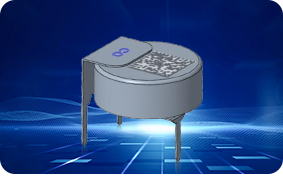
FC-CO-5000/FC-CO-5000L Carbon Monoxide Sensor

FC-H2-2000/FC-H2-20000L Hydrogen Sensor

Characteristics:
UL Certification
Anti silicon poisoning
Wide temperature range operation (-40 ℃~105 ℃)
Anti VOC gas interference
long life
maintenance-free
Answering real-life scenarios with technology and driving industry progress with standards
With the continuous evolution of energy storage and AI data center application scenarios, gas detection is gradually moving from simple "compliance certification" to "solving real risks".
ProSense focuses on anti-interference and silicon poisoning resistance, reliability and long-term stability, and a wide temperature range. It promotes sensing technology paths based on solving practical risks in multiple application scenarios, continuously participates in and influences the industry's consensus definition of "safe and effective detection", and establishes a practical technical benchmark for gas detection safety applications.
About ProSense
ProSense is a high-tech enterprise dedicated to the research and manufacturing of advanced gas sensors, committed to providing high-performance and high reliability sensing solutions for global customers. The company continues to invest in core technology research and development, overcome key pain points in the industry, and continuously lead the development direction of gas sensing technology. With innovative products and excellent quality, ProSense is gradually growing into an important promoter and leader in the global gas safety monitoring field.
ProSense adheres to the full stack self-developed technology route, and has established a kilogram level gas sensor catalyst research and development base and an automated production aging calibration system for millions of gas sensors per year. Its product line covers the fields of toxic and harmful, flammable and explosive, and environmental gas detection; Pu Sheng Sensing's multiple innovative products have become core sensing components in vertical fields such as smart firefighting, industrial testing, and energy storage safety.