The only representative of a gas sensing company in the world! Pu Sheng Sensing Zhao Li was selected for UL 2285 Solid State Battery Safety Standard Technical Standardization Committee
News2026-10-09
With advanced and reliable gas sensing technology, we support the construction of international safety standards and provide critical safety support for the global solid-state battery industry
After being awarded the UL Standards&Engagement (ULSE) Global Outstanding Female Expert in March this year, Ms. Zhao Li, General Manager and Chief Engineer of ProSense was officially selected for the UL 2285 Solid State Battery Technology Committee (TC 2285) on November 3rd.
In this selection, ProSense will rely on its deep technical accumulation and rich engineering experience in advanced gas sensing to provide professional support in gas risk identification, monitoring reliability, and actual working condition verification for the development of UL 2285 solid-state battery safety standards, helping to effectively connect safety requirements with industrial application needs, and providing support for the innovative development and safe application of new generation battery technology.
As a forward thinking scientist and inventor in the industry, Ms. Zhao Li has long been committed to transforming advanced gas sensing technology into highly reliable and applicable solutions, providing core security guarantees for key application scenarios such as energy storage and data centers, solid-state batteries, industrial safety, transportation, and residential safety.
Ms. Zhao Li stated:
We are honored to have been officially selected for the UL 2285 Solid State Battery Safety Standards Technical Committee and are well aware of the responsibilities we bear. As the global solid-state battery industry accelerates towards large-scale applications, safety monitoring needs to be further integrated into risk prevention, full process management, and reliable perception systems. ProSense will actively participate in the development of UL 2285 standard, work with ULSE and global cross disciplinary experts to promote the establishment of scientifically rigorous and practical safety evaluation methods, synchronize safety requirements with technological innovation, and build a solid safety foundation for the large-scale application of solid-state batteries and global industrial development. ”
Building forward-looking safety capabilities for next-generation battery technology
Solid state batteries carry the industry's expectations for higher energy density, better safety performance, and wider application space. As material systems, manufacturing processes, and system designs continue to evolve, safety assessment and risk management also need to develop synchronously.
Different solid-state battery technology routes have different material characteristics and failure mechanisms. To promote the large-scale application of industries, it is necessary to have a deep understanding of these differences and establish safety evaluation methods that are based on experimental evidence and suitable for actual working conditions. The development of UL 2285 "Solid State Battery Safety Standard" is aimed at meeting the unique safety requirements of solid-state batteries and promoting the establishment of relevant evaluation frameworks.
Regarding UL 2285 Solid State Battery Safety Standard
UL 2285 "Standard for Safety for Solid State Batteries" is a joint safety standard developed by UL Standards&Engagement (ULSE) in the United States and Canada, aimed at rechargeable solid-state batteries with technology routes such as sulfides, oxides, halides, polymers, and composite electrolytes. This standard aims to establish applicable safety requirements, test methods, and evaluation criteria for the unique material characteristics and failure mechanisms of solid-state batteries, reduce fire and explosion risks, and provide standard support for the safe application and industrial development of new generation battery technology. At present, the standard is being developed.
Introduction to the UL 2285 Project for "Standards Action" on the ANSI official website
Deeply explore materials and scenarios, identify key gas risks
The gas monitoring of solid-state batteries needs to start from specific material systems and application scenarios.
Taking sulfide solid electrolytes as an example, some materials may react upon contact with moisture, releasing toxic hydrogen sulfide (H ₂ S). This risk needs to be included in the safety management of material handling, production manufacturing, system application, and abnormal handling.
Advanced gas sensing technology is the technical foundation for converting gas risks in the application process into reliable monitoring data, providing key basis for risk assessment and safety response. By identifying the gas release and concentration changes of specific material systems under abnormal conditions, reliable basis can be provided for risk assessment, personnel protection, and system safety linkage. For material research and development, process validation, and practical applications, gas monitoring schemes should focus on specific risks, reasonably determine target gases, detection ranges, installation locations, and alarm strategies, and verify their effectiveness through experiments to promote safety monitoring from device performance to system applications.
Identifying risks earlier, making decisions more based, and responding more promptly - this is the core value of advanced gas sensing empowering battery safety.
Deeply involved in the formulation of international standards
The only enterprise and sensor manufacturer in the world that simultaneously participates in the development of four international standards for UL gas detection and related applications
As the only company in the world that has obtained authorization from four international standard committees for gas detection and related applications under ULSE, Pusheng Sensing:
UL2285 Solid State Battery Safety Standard
UL 2075 Gas and Steam Detectors and Sensors
UL 2034 Single Point and Multi Point Carbon Monoxide Alarm Devices
UL 2201 Portable Generator Carbon Monoxide Emission Rate
ProSense's advanced sensing technology for hydrogen sulfide (H ₂ S) provides critical safety support for the global solid-state battery industry
With the gradual industrialization of solid-state batteries, their higher energy density, superior safety performance, and longer cycle life are driving new development stages in industries such as new energy vehicles, low altitude economy, robotics, and energy storage.
However, with the large-scale application of sulfide solid electrolytes, monitoring hydrogen sulfide (H ₂ S) leakage has become an important safety issue recognized by the industry.
Whether in the manufacturing of solid-state battery materials, battery cell production, PACK assembly, warehousing and logistics, or during vehicle operation, hydrogen sulfide gas may be released once the battery becomes damp, heated, mechanically damaged, or experiences thermal runaway. How to achieve earlier detection, faster warning, and more reliable monitoring has become an important challenge that the global solid-state battery industry chain must face.
As an industry leader in advanced gas sensing technology,ProSense always adheres to driving technological innovation with real application scenarios, continuously cultivating the field of new energy security, and launching hydrogen sulfide (H ₂ S) gas sensing solutions for the development of the new generation solid-state battery industry.
This solution covers key application scenarios such as solid-state battery production and manufacturing, warehousing and transportation, energy storage systems, and passenger vehicles, and builds a full lifecycle safety monitoring capability for the global solid-state battery industry chain covering production lines, warehouses, and vehicles. It uses highly reliable sensing technology to help the industry achieve coordinated development of safety and innovation.
H ₂ S safety monitoring platform built for future battery technology
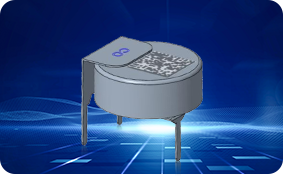
ProSense FC0-H2S-100 Hydrogen Sulfide Sensor, specially developed for solid-state battery industry applications, can be widely used in:
Leakage monitoring of solid-state battery manufacturing production line
Solid state battery warehouse and logistics storage safety monitoring
Early warning of battery thermal runaway
H ₂ S safety monitoring for new energy passenger vehicles
Safety management of solid-state energy storage system operation
Based on the core material technology of independent patents and profound technical accumulation in the field of new energy security, the product adopts the concept of vehicle grade reliability design, and has been comprehensively optimized in terms of long-term stability, complex environmental adaptability, and pollution resistance, providing global solid-state battery customers with long-term reliable gas sensing capabilities.
Core technological advantages
Specially designed for the solid-state battery industry
Specially optimize the application characteristics of sulfide solid electrolytes to meet the safety monitoring requirements throughout the entire process from manufacturing to application.
Vehicle grade reliability design
Developed according to the long-term reliability concept of automotive electronics, it is suitable for harsh application environments such as new energy vehicles and energy storage.
Excellent anti-interference ability
It has excellent resistance to cross gas interference and silicon poisoning, and maintains stable output in complex industrial sites.
Covering extreme environments
The working temperature ranges from -40 ℃ to 125 ℃, meeting the harsh working conditions of high-temperature manufacturing processes, energy storage systems, and vehicle operation.
Ultra long lifecycle
The design lifespan can reach up to 15 years, effectively reducing maintenance costs and improving the reliability of the system throughout its entire lifecycle.
Regarding UL Standards&Engagement (ULSE)
UL Standards&Engagement (ULSE) is a leading non-profit safety standards development and advocacy organization worldwide, aiming to promote the safety, reliability, and sustainability of global products, systems, and services through science driven safety standards. Since its first safety standard was released in 1903, ULSE has developed and released nearly 1700 safety standards and guidance documents, covering various fields such as household appliances, fire safety, energy storage, and autonomous driving, effectively improving public safety levels and guiding industry safety innovation and market development.
ULSE gathers professionals from manufacturers, regulatory agencies, academia, and other fields to develop standards through a transparent consensus mechanism. These standards not only provide strict technical specifications for design and testing, but also serve as authoritative references for global policy makers and regulatory authorities. The work of ULSE promotes the construction of a global security ecosystem and is an important force in promoting the development of international security standards and enhancing industry trust.
About ProSense
ProSense is a high-tech enterprise dedicated to the research and manufacturing of advanced gas sensors, committed to providing high-performance and high reliability sensing solutions for global customers. The company continues to invest in core technology research and development, overcome key pain points in the industry, and continuously lead the development direction of gas sensing technology. With innovative products and excellent quality, ProSense is gradually growing into an important promoter and leader in the global gas safety monitoring field.
ProSense adheres to the full stack self-developed technology route, and has established a kilogram level gas sensor catalyst research and development base and an automated production aging calibration system for millions of gas sensors per year. Its product line covers the fields of toxic and harmful, flammable and explosive, and environmental gas detection; ProSense's multiple innovative products have become core sensing components in vertical fields such as smart firefighting, industrial testing, and energy storage safety.