What signal does the inclusion of hydrogen detection in the bidding requirements for the US military energy storage project release?
News2026-10-08
Make risks visible earlier and ensure more secure responses
How to establish a more reliable gas safety defense line for energy storage systems based on a military engineering requirement
The construction of a 10 MW battery energy storage system for the P-1238 project at the 29th Palm Village Base of the United States Marine Corps. In the technical annex of the open bidding, the project clearly requires the configuration of hydrogen and gas detection systems to continuously monitor hazardous gases, including hydrogen, in the energy storage system; Simultaneously requiring the establishment of independent cooling and ventilation systems; Emphasize the role of gas monitoring in identifying the accumulation of combustible gases and reducing the risk of fire and explosion.
Source: https://sam.gov/opp/b1e5edbd3fca42ed8b76682d431477ec/view
The military scenario has strict requirements for energy resilience and continuous operation, and this document conveys a clear engineering signal: energy storage safety requires timely detection of abnormal gases and entry of monitoring results into the system's disposal process.
From early detection of anomalies to taking action
Abnormal battery may be accompanied by deflation, temperature rise, and changes in electrical parameters. Gas detection provides another observation dimension for battery management systems (BMS), temperature monitoring, and fire protection systems.
The warning window is not fixed and unchanging. The chemical system of the battery cell, state of charge, failure mode, airflow organization, and detector position all affect when the gas reaches the detection point. Therefore, engineering design not only needs to be able to identify low concentration changes, but also needs to continuously provide reliable signals in environments with wide temperature and humidity, as well as interference from siloxanes and esters.
For lithium-ion battery energy storage, FM DS 5-33 Lithium-Ion Battery Energy Storage Systems Sections 2.5.5.2 to 2.5.5.3 of the loss prevention data table state that when the hydrogen concentration exceeds 10% of the lower explosive limit (LEL), the hydrogen detector should sound an alarm and trigger electrical isolation and emergency ventilation of the energy storage system. This indicates that the value of hydrogen monitoring needs to be reflected through linkage: signals are detected, confirmed, and corresponding safety actions are driven.
The value of low concentration and multi-stage hydrogen concentration detection and alarm strategies in the safety management of energy storage systems
Accurately and reliably linking fans in the very early stages of thermal runaway and gas release can avoid the accumulation of large amounts of combustible gases and the failure of linked fans caused by cascading thermal runaway, thereby achieving effective risk control.
Integrating multi-level hydrogen concentration detection and alarm strategies for low concentration (500ppm), 10% LFL (4000ppm), and 25% LFL (10000ppm) with battery management systems (BMS) and safety control strategies can achieve:
Timely intervention: Before the formation of a dangerous situation, activate forced ventilation, isolate abnormal modules, or stop charging and discharging operations.
Improve operational safety: Reduce the risk of thermal runaway spreading between cells or modules through early intervention.
Data driven decision-making: providing actionable basis for predictive operations, risk assessment, and compliance with industry safety standards.
As an important front line for the safety management of energy storage systems, low concentration hydrogen detection can significantly enhance the overall resilience and long-term operational reliability of the system, providing reliable safety guarantees for the energy storage industry.
Based on the above background, relying solely on ventilation systems or alarm strategies based on high concentration gases often makes it difficult to respond promptly to rapidly developing thermal runaway processes. In this case, introducing low concentration hydrogen gas alarm as a pre sensing means is of great significance.
Low concentration and multi-stage hydrogen detection shift energy storage systems from "passive response" to "active prevention" by advancing safety strategies to the early stages of risk, becoming a key technological path to enhance system safety, reliability, and business continuity.
ProSense is a gas sensing solution specifically designed for energy storage systems and AI data center lithium-ion scenarios
As an industry leader in the research and manufacturing of advanced gas sensors, ProSense continues to promote technological breakthroughs and international compliance processes in the field of energy storage applications, starting from complex on-site environments.
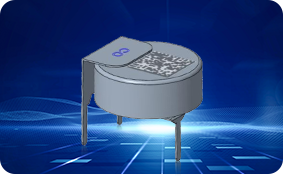
ProSense is a hydrogen and carbon monoxide fuel cell sensor developed specifically for energy storage systems and data center applications. Its operating temperature range covers -40 ° C to+85 ° C, making it the world's first advanced sensor brand to receive UL Solutions certification for 1024 hours of silicon poisoning resistance and 85 ° C high temperature reliability. The relevant verification not only focuses on whether the sensor can detect the target gas under laboratory conditions, but also on its performance in maintaining long-term detection ability in high temperature and pollutant environments.
Advanced gas sensing solutions include:
Low concentration and multi-level hydrogen detection and system linkage: achieve integration of low concentration (500ppm), 10% LFL (4000ppm), 25% LFL (10000ppm) multi-level concentration hydrogen detection with battery management system (BMS) and safety control strategy.
Anti pollution and anti silicon poisoning design: effectively reduces the chemical coverage of sensitive components by interfering substances such as VOCs and siloxanes, and improves the stability of hydrogen and CO sensors in long-term high pollution environments.
Optimization of high temperature resistance: Meet the continuous testing requirements of energy storage facilities under closed energy storage cabinets and high temperature operating conditions before operation.
Improved lifecycle stability: Extend the effective operating cycle of sensors, reduce the risk of frequent on-site replacement, maintenance, and drift.
The technological path of Pusheng Sensing not only focuses on compliance, but also emphasizes the anti-interference ability and reliable operation ability of gas sensors in real energy storage field environments, improving the early warning efficiency and overall safety guarantee level of the system from the source.
Trustworthy data is necessary to support trustworthy linkage
Energy storage facilities require long-term continuous operation. Gas sensors can sound an alarm during the initial operation and need to remain stable under high temperature, humidity fluctuations, and potential pollutant influences. The selectivity, anti-interference ability, drift control, and verifiable maintenance mechanism determine whether low concentration signals can be continuously recognized and whether multi-level linkage can be established on reliable data.
Enable advanced gas sensing services to provide real-world scenarios, allowing risks to be identified earlier.
About ProSense
ProSense is a high-tech enterprise dedicated to the research and manufacturing of advanced gas sensors, committed to providing high-performance and high reliability sensing solutions for global customers. The company continues to invest in core technology research and development, overcome key pain points in the industry, and continuously lead the development direction of gas sensing technology. With innovative products and excellent quality, ProSense is gradually growing into an important promoter and leader in the global gas safety monitoring field.
ProSense adheres to the full stack self-developed technology route, and has established a kilogram level gas sensor catalyst research and development base and an automated production aging calibration system for millions of gas sensors per year. Its product line covers the fields of toxic and harmful, flammable and explosive, and environmental gas detection; ProSense's multiple innovative products have become core sensing components in vertical fields such as smart firefighting, industrial testing, and energy storage safety.