With the rapid development of artificial intelligence (AI), cloud computing, and high-performance computing (HPC), data centers are continuously evolving toward higher power density, higher availability, and greater energy efficiency. As the core infrastructure ensuring business continuity, UPS (Uninterruptible Power Supply) systems are also undergoing technological upgrades.
In recent years, an increasing number of data centers are adopting lithium-ion batteries to replace traditional valve-regulated lead-acid (VRLA) batteries as UPS energy storage units. Lithium-ion batteries offer higher energy density, longer service life, faster charge/discharge capabilities, and lower total lifecycle maintenance costs. They can effectively reduce equipment floor space requirements and improve energy utilization efficiency, making them an important development direction for modern data centers.
However, technological advantages do not mean the disappearance of risks. As the scale of lithium-ion battery applications continues to expand, their thermal runaway and fire risks have become critical issues that must be addressed in data center planning, design, operation, and insurance assessments. Data centers have always been among the most safety-critical critical infrastructure. The overall incidence rate of lithium-ion battery fire events is not high. However, industry practice demonstrates that when an incident does occur, its impact often extends far beyond the equipment itself.
UPS System Transformation Redefines Fire Risk in Data Centers
UPS (Uninterruptible Power Supply) is the critical infrastructure that ensures business continuity in data centers. Its role is to continuously supply power to critical IT equipment during utility power interruptions, ensuring that data and core business systems do not cease operation due to instantaneous power loss. As lithium-ion energy storage systems enter data centers, the complexity of fire safety management has increased significantly.
Traditional data centers typically employ diesel or natural gas generators as backup power sources. However, since generators typically require several seconds from startup to stable power output, most data centers have long been equipped with large-capacity lead-acid batteries as UPS energy storage units to handle instantaneous power supply during generator startup.
In recent years, this technical approach has undergone significant change.
As lithium-ion battery technology matures, traditional lead-acid batteries are being rapidly replaced by lithium-ion energy storage systems and are widely deployed in UPS applications. This transition not only improves system energy density, operating efficiency, and lifecycle performance, but also alters the fire risk profile of data centers. Lithium-ion batteries are currently one of the most important ongoing fire safety challenges in data centers. As standards and codes continue to evolve, safety management requirements are also continuously advancing.
For large data centers, a single UPS battery incident may result in:
- Interruption of IT business continuity
- Unavailability of large-scale cloud services
- Impact on financial, telecommunications, and public services
- Extended data center downtime for repairs
- Damage to corporate brand reputation
- Substantial economic losses
Multiple Typical Incidents Have Once Again Raised Industry Concerns
In recent years, multiple publicly reported data center fire incidents worldwide have involved lithium-ion batteries to varying degrees.
For example, in September 2025, a data center in South Korea experienced an explosion and fire caused by UPS lithium-ion batteries, resulting in the disruption of over 600 government online services, including tax, postal, and digital identity authentication systems. During the incident response, nearly 200 firefighters worked continuously for approximately 10 hours to fully contain the fire.
Additional incidents include:
- In 2021, a data center in France caught fire, destroying the entire building and resulting in the loss of approximately 30,000 servers.
- In 2025, two data center fire incidents in Virginia, USA, were also believed to be related to lithium-ion batteries.
These events further demonstrate that with the large-scale deployment of lithium-ion UPS systems, associated risks have become a critical focus of data center fire protection design.
UPS Lithium-Ion Battery Deployment Methods Are Evolving
Currently, lithium-ion UPS in data centers is typically deployed in three configurations:
① Exterior Standalone Energy Storage Containers
UPS batteries are installed in independent containers outside the main building, maintaining a safe distance from the primary structure.
② Dedicated UPS Battery Rooms
All UPS lithium-ion batteries are centrally located in a dedicated battery room within the data center.
③ Distributed UPS Architecture
An increasing number of newly built AI data centers are adopting distributed UPS architectures, where each server rack is equipped with its own UPS battery, enabling decentralized deployment of energy storage units.
From a fire safety perspective, exterior standalone placement remains the lowest-risk approach.
However, with the rapid development of AI servers, distributed UPS is becoming the fastest-growing deployment model and represents a new architecture for which industry engineering experience is currently relatively limited.
Does Distributed UPS Reduce Fire Risk?
Data center operators, battery manufacturers, and some fire protection engineering experts who support distributed UPS architectures believe that this configuration offers certain fire safety advantages.
Since UPS batteries are distributed across individual server racks, even if thermal runaway occurs in one battery, its impact is typically confined to a single rack, making large-scale thermal runaway propagation—as might occur in a centralized battery room—less likely.
Additionally, because the number of batteries involved in thermal runaway at any given time is reduced, the total amount of flammable off-gas released during thermal runaway is correspondingly lower. This helps maintain combustible gas concentrations within large data halls below the lower flammable limit, thereby reducing the risk of creating an explosive gas atmosphere. Consequently, low-level and multi-stage hydrogen concentration detection and alarming are critically important for thermal runaway management of lithium-ion UPS systems in data centers.
The Value of Low-Level and Multi-Stage Hydrogen Detection and Alarm Strategies in Lithium-Ion System Safety Management for AI Data Centers
By accurately and reliably initiating ventilation fans at the earliest stages of thermal runaway onset and gas release, it is possible to both prevent the accumulation of large quantities of flammable gases and avoid fan system failures caused by cascading thermal runaway events—thereby achieving effective risk control.
Integrating multi-stage hydrogen detection and alarm strategies—at low concentration (500 ppm), 10% LFL (4,000 ppm), and 25% LFL (10,000 ppm)—with Battery Management Systems (BMS) and safety control strategies enables:
- Timely intervention: Initiating forced ventilation, isolating abnormal modules, or stopping charge/discharge operations before hazardous conditions develop.
- Enhanced operational safety: Reducing the risk of thermal runaway propagation between cells or modules through early intervention.
- Data-driven decision-making: Providing actionable basis for predictive maintenance, risk assessment, and compliance with industry safety standards.
As a critical front-line defense in energy storage system safety management, low-level hydrogen detection can significantly enhance overall system resilience and long-term operational reliability, delivering reliable safety protection for the energy storage industry.
Against this backdrop, relying solely on ventilation systems or high-concentration gas-based alarm strategies often proves insufficient for timely response to rapidly evolving thermal runaway events. In this context, the introduction of low-level hydrogen alarming as an advanced sensing measure is of significant importance.
Low-level and multi-stage hydrogen detection, by shifting safety strategies to the early risk stage, enables energy storage systems to transition from "reactive response" to "proactive prevention," serving as a key technical pathway for improving system safety, reliability, and business continuity.
Prosense Gas Sensing Solutions Specifically Designed for AI Data Center Lithium-Ion Battery Applications
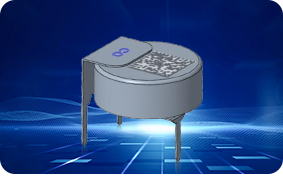
As a leading provider of advanced gas sensor R&D and manufacturing, Prosense starts from the real-world complexities of the field and continues to drive technological breakthroughs and international compliance progress in energy storage application scenarios.
The company's hydrogen sensor series products have obtained UL 2075 certification for the US and CAN/ULC 588 certification for Canada, with an operating temperature range covering -40°C to 105°C. They have become industry benchmarks in environmental adaptability, long-term stability, anti-silicon poisoning, and reliability, and have been widely deployed in energy storage system safety monitoring, AI data center infrastructure, and new energy-related applications.
Advanced gas sensing solutions include:
- Low-level and multi-level hydrogen detection with system interlocking: Enables multi-level hydrogen detection at low concentration (500 ppm), 10% LFL (4,000 ppm), and 25% LFL (10,000 ppm), integrated with Battery Management Systems (BMS) and safety control strategies.
- Anti-contamination and anti-silicon poisoning design: Effectively reduces chemical coating of sensing elements by interferents such as VOCs and siloxanes, enhancing hydrogen and CO sensor stability in long-term high-contamination environments.
- High-temperature performance optimization: Meets the continuous detection requirements of energy storage facilities under pre-commissioning enclosed cabinet conditions and high-temperature operation.
- Lifecycle stability enhancement: Extends effective sensor operating life, reducing on-site replacement frequency, maintenance needs, and drift risks.
Data Center Fire Protection Strategies Continue to Evolve
Fire protection engineering experts note that data center fire protection design has always revolved around two core objectives:
- Property Protection
- Business Continuity
However, the technical pathways to achieve these objectives are continuously changing. Prosense's technical approach not only focuses on compliance but also emphasizes the anti-interference capability and reliable operation of gas sensors in real-world AI data center lithium-ion system field environments—improving the overall early warning efficiency and safety assurance level from the ground up.
About Prosense
Prosense is a high-tech enterprise specializing in the R&D and manufacturing of advanced gas sensors, committed to providing global customers with high-performance, high-reliability sensing solutions. The company continues to invest in core technology R&D, tackling critical industry challenges and steadily leading the development direction of gas sensing technologies. With innovative products and exceptional quality, Prosense is progressively emerging as a significant driver and leader in the global gas safety monitoring sector.
Prosense adheres to a full-stack in-house R&D approach, having established a kilogram-level catalyst development base for gas sensors and an automated production and aging/calibration system with an annual output of tens of millions of gas sensors. Its product portfolio covers toxic, hazardous, combustible, explosive, and environmental gas detection applications. Multiple innovative products from Prosense have become core sensing components in vertical markets such as smart fire protection, industrial safety, and energy storage safety.