Market Report for the Year of the Horse | Insights into the Market Sampling Mechanism for Household Smoke and Carbon Monoxide Detectors in the EU and UK
News2026-11-23
The key to measuring the safety performance of household alarms lies in whether the product can issue effective alarms in a timely manner when danger occurs throughout its entire lifecycle.
The publicly available market supervision records of the European Union and the United Kingdom show that regulatory agencies conduct supervision through compliance document review, market batch sampling, online sales inspection, and import inspection, and verify the overall performance through laboratory testing when necessary. The publicly available cases of carbon monoxide (CO) alarms in the past five years have revealed three typical types of failures: insufficient detection sensitivity under specified test conditions, leading to the risk of missed reporting; After detecting carbon monoxide, the alarm activation is delayed; Some products with remote monitoring capabilities may not be able to send alerts to the monitoring center when battery performance deteriorates.
For alarm manufacturers and cross-border e-commerce brands, compliance is no longer just a necessary condition for market access, but a core element directly related to the company's ability to sustain operations, brand reputation, capital financing, and long-term market competitiveness.
The mechanism for conducting market inspections by the European Union and the United Kingdom
The EU selects samples based on risk and is executed by member states
Article 11 of the EU Regulation on Market Regulation and Product Compliance (EU) 2019/1020 stipulates that the competent authority shall conduct document verification in accordance with risk arrangements and, where appropriate, physical inspection and laboratory testing. Complaints, potential product hazards, and past non-compliance records can affect regulatory priorities. The regulation also grants the competent authority the authority to purchase samples anonymously under applicable conditions, and establishes a risk-based border inspection mechanism for imported products entering the EU market. Article 13 requires member states to develop national market supervision strategies and publicly disclose summaries at least once every four years. The degree of disclosure for specific categories, batches, and sampling times varies depending on the competent authorities and projects.
Source: Regulation (EU) 2019/1020 of the European Parliament and of the Council of 20 June 2019 on market surveillance and compliance of products and amending Directive 2004/42/EC and Regulations (EC) No 765/2008 and (EU) No 305/2011 (Text with EEA relevance.)
Household smoke alarms can be traced along the regulatory channels for building products, and EN 14604 is the main standard number for identifying specific items. Regulatory oversight can verify performance statements (DoP), CE markings, underlying technical documents, and local language manuals, as well as test smoke sensitivity.
Household carbon monoxide detectors can be traced along consumer product safety channels. The special inspection in France and Poland is based on the locally adopted version of EN 50291-1, involving alarm response, safety signs, and instructions. Products with wireless networking capabilities also need to pay attention to the wireless device regulations applicable to their functionality.
OPSS collaborates with local trade standards departments for enforcement in the UK
British companies should identify applicable rules based on the sales destination. The general safety framework for consumer goods in Great Britain (England, Scotland, and Wales) involves the General Product Safety Regulations 2005, with specific rules for related construction products. Starting from December 13, 2024, Northern Ireland will be subject to the EU General Product Safety Regulation (EU) 2023/988, and relevant construction products will also be subject to the corresponding EU construction product system.
In 2025/26, the UK Office for Product Safety and Standards (OPSS) referred leads to local law enforcement agencies. Suffolk Trade Standards Department inspected three batches of smoke alarms intended for online sales, and detained and refused entry of 2437 non compliant products due to issues with accompanying documents, necessary labeling, and user instructions. Related online product links have also been removed. This enforcement record indicates that import inspections and e-commerce delisting can be implemented in conjunction with the same batch of products.
Public documents for tracking and spot checking plans
Sampling and Recall Cases of CO Alarm Devices in the Past Five Years
The following are representative official records that can be verified between November 22, 2021 and November 21, 2026.
Key points for verifying the entire carbon monoxide alarm system from the perspective of recall reasons
Firstly, verify the complete time from CO exposure to sound alarm activation.
The UK unbranded products and the French SEDEA case involve insufficient or excessive detection, while the SHD and Cavius cases explicitly involve detection or alarm delays. Engineering investigations can verify sensor sensitivity, overall intake and gas transmission, signal processing, and alarm logic separately to locate where the delay occurs. The 55 ppm and 110 ppm mentioned in the announcement belong to the specific experimental conditions disclosed in the case. Product acceptance should be based on the applicable version standards to verify the test concentration, tolerance, and response time window.
Secondly, verify the safety functions that can still be performed during battery degradation.
The Polish report shows that low battery alerts and device malfunction indications themselves may also fail. The Deltronic case extends the inspection boundary to the remote monitoring center: for products that promise remote alarms, local alarms, fault prompts, wireless transmission and reception should be verified under specified power supply conditions and foreseeable battery degradation conditions.
Thirdly, ensure that product information is consistent with actual functionality.
France and Poland have repeatedly checked safety warnings, fault prompts, and local language instructions. The manual should accurately explain what the product can detect, how to identify equipment faults, and what actions should be taken after an alarm. For combination or networked products, each claimed function, applicable installation conditions, and alarm delivery method should be corresponded to the overall validation record one by one.
Fourth, extend validation to mass production batches.
SEDEA, SHD, Cavius, and Deltronic announcements all use models and batches to determine the scope of disposal. Linking key materials, hardware and firmware versions, production batches, and finished product testing records can quickly identify affected products when security anomalies are discovered, and provide a basis for revalidation after changes.
From product recalls to the four major trends in industry development
1、 Response speed is a key indicator of life safety
For carbon monoxide detectors, the response time is directly related to the safety of consumers' lives.
In recent years, public cases have shown that even if a product can eventually trigger an alarm, if the response time exceeds the safety window specified by the standard, it still brings great security risks.
Therefore, response speed has become one of the core indicators for measuring product reliability.
2、 Long term reliability has become a new competitive advantage
In practical use, the working environment faced by the whole machine alarm and its internal sensors is often more severe and complex than laboratory testing conditions, posing higher challenges to core sensing technology. Throughout the entire lifecycle of the product, it needs to continuously face:
High and low temperature environments
High humidity and condensation
kitchen fumes
Cleaning agents and alcohol
Perfume and air freshener
Complex interferences such as volatile organic compounds (VOCs)
Any long-term drift, performance degradation, or change in response speed may affect the final alarm performance.
Therefore, more and more international brands are establishing long-term reliability verification systems that cover the entire product lifecycle, rather than just focusing on testing and certification.
3、 Water free and anti toxic capabilities have become important directions for the next generation of CO sensing technology
In recent years, the international industry has increasingly focused on the frequent failure of water system CO sensors, as well as the impact of pollutants such as siloxanes and volatile organic compounds (VOCs) on the long-term performance of gas sensors.
For electrochemical gas sensors, long-term exposure to complex environments may lead to decreased catalytic activity, changes in response speed, or sensitivity degradation.
Therefore, waterless design, anti silicon poisoning, and anti VOC interference design are gradually becoming important development directions for high reliability gas sensors, and are also important technical capabilities for future product differentiation competition.
4、 Functional safety has been extended to the entire system
In recent years, public cases have also shown that the reliability of an alarm depends not only on the sensor itself, but also on:
signal acquisition
software algorithm
power management
communication system
Whole machine functional safety design
High reliability alarms will place greater emphasis on the collaborative design between carbon monoxide sensors, electronic hardware, and software systems to achieve truly reliable operation of the entire system.
Three typical household application scenarios and differentiated compliance requirements
According to standard definitions and market applications, carbon monoxide detectors are mainly divided into the following three types of application scenarios:
1. Application of fixed installation type in residential buildings
Suitable for permanent installation on walls or ceilings in residential environments, with a focus on long-term stability, low false alarm rates, and adaptability to daily environments.
2. RV and non temperature controlled area applications
Suitable for RVs and environments without temperature control, requiring greater temperature and humidity changes, vibration, and intermittent use conditions.
3. Yacht applications
For water scenes such as entertainment boats, in addition to temperature and humidity fluctuations, salt spray environment, mechanical vibration, and more stringent power supply and installation conditions also need to be considered.
For the application scenarios of RVs and yachts, both UL 2034 and CSA 6.19 standards have introduced additional environmental adaptability and reliability testing requirements. In practical use, the working environment faced by the whole machine alarm and its internal sensors is often more severe and complex than laboratory testing conditions, posing higher challenges to core sensing technology.
Core challenge: Sensor environmental adaptability determines overall reliability
In multiple application scenarios, the performance of carbon monoxide detectors highly depends on the environmental adaptability of their core sensors, including:
Stable response capability under wide temperature range
Consistency and drift control in long-term operation
Reliable working ability under factors such as vibration and humidity changes
For complete machine manufacturers who hope to enter the residential, RV, and yacht North American markets simultaneously, choosing sensor solutions with multi scenario compliance capabilities and mature engineering verification foundations is an important prerequisite for reducing certification risks and accelerating the listing process.
ProSense FC-CO-5000 and FC-CO-5000-0X: A Unified Sensing Platform Covering Multiple Scenarios
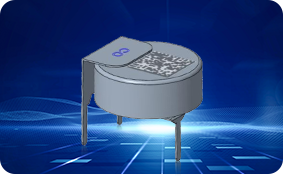
Focused on core material science, international standard participation, and vertical application landing, Pusheng Sensing has launched the FC-CO-5000 and FCW-CO-5000-0X series of waterless all solid state fuel cell technology carbon monoxide sensors based on independent research and development capabilities. It is currently the only CO sensor solution in the industry that meets UL certification requirements for multiple application scenarios in residential, RV, and yacht areas in both the European Union and North America.
In the design phase, the product is systematically planned around multi application scenario compliance and long-term reliable operation, fully considering the comprehensive requirements of temperature adaptability, stability, and consistency of sensors under different environmental conditions. This helps the whole machine manufacturer build a product portfolio covering multiple markets on a single sensing platform.
By adopting FC-CO-5000 and FCW-CO-5000-0X, complete machine manufacturers can reduce the design and certification complexity caused by differences in application scenarios while meeting the requirements of EN50291-1, EN50291-2, UL 2034 (5th edition), CSA 6.19-17, JIA regulations and standards.
Market oriented value
Unified platform: One sensor covers multiple application scenarios, simplifying product portfolio
Compliance guarantee: supporting certification needs in the mainstream residential, RV, and yacht markets in North America
Reliable operation: Adapt to complex environmental conditions and enhance the long-term stability of end products
Accelerating time to market: reducing the time and cost pressure of repeated testing and re certification
From Technology to Standards: Compliance Capability Originates from Deep Participation in Standards
In addition to its engineering capabilities at the product level, ProSense actively participates in the construction of the North American gas safety related standard system and is the only member of the technical committee authorized by ULSE for UL 2075, UL 2034, UL 2201, and UL2285 standards worldwide. Through long-term participation in standard discussions and technical reviews, ProSense maintains a continuous and in-depth understanding of the safety logic, testing boundaries, and future evolution directions behind standard terms.
This role enables Pusheng Sensing to advance standard requirements to the product design and verification stage, and provide feedback on actual engineering experience to the standard system, helping customers form clear judgments on compliance paths in the early stages of product development, reducing repeated testing and uncertainty.
The core value created for alarm manufacturers
Expected compliance: Based on mature standard understanding and certification experience, reduce market access risks in North America
Platform based design: Series sensors cover multiple application scenarios, simplifying product line layout
Engineering reliability: To cope with complex environmental conditions and improve the long-term stability of end products
Efficiency improvement in listing: reducing the time and cost pressure caused by repeated testing and re certification
Conclusion
With the continuous evolution of residential and travel scenarios in Europe and America, carbon monoxide safety protection is extending to more diverse and complex application environments. ProSense provides a reliable and unified solution for carbon monoxide alarm manufacturers in the European and American markets through advanced gas detection technology, mature engineering verification system, and deep participation in international standards, helping customers achieve the dual goals of compliant listing and long-term stable operation under strict safety standards.
About ProSense
ProSense is a high-tech enterprise dedicated to the research and manufacturing of advanced gas sensors, committed to providing high-performance and high reliability sensing solutions for global customers. The company continues to invest in core technology research and development, overcome key pain points in the industry, and continuously lead the development direction of gas sensing technology. With innovative products and excellent quality, ProSense is gradually growing into an important promoter and leader in the global gas safety monitoring field.
ProSense adheres to the full stack self-developed technology route, and has established a kilogram level gas sensor catalyst research and development base and an automated production aging calibration system for millions of gas sensors per year. Its product line covers the fields of toxic and harmful, flammable and explosive, and environmental gas detection;ProSense's multiple innovative products have become core sensing components in vertical fields such as smart firefighting, industrial testing, and energy storage safety.