Carbon monoxide detectors for North American travel | From portable design to full lifecycle reliability
News2026-11-02
Pay attention to sensor contamination risks in product types, application boundaries, and luggage environments
In North America, gas water heaters, heating equipment, and adjacent combustion facilities in hotels, homestays, and vacation apartments can all be sources of carbon monoxide (CO) risk. The Travel CO Alarm provides travelers with a portable warning tool for carbon monoxide emissions during travel.
However, the reliability of travel products depends not only on the alarm performance after check-in. After being put in the trunk, handbag or schoolbag, the alarm may also coexist with perfume, alcohol disinfection products, hair care products and other volatile substances. The entire journey from storage, transportation to retrieval and use should be incorporated into product design and sensor selection.
What are the types of CO alarms for travel?
From the perspective of product form and usage, the travel related carbon monoxide alarms on the market mainly include the following categories:
Although these products may all be used for travel, their protection objectives and scope of application are not the same. Ordinary accommodation alarms, low concentration personal monitors, and RV specific alarms should be checked separately for usage instructions and certification scope, and their applicability cannot be judged solely based on the names "Portable" or "Travel".
Application scenarios determine product boundaries
Hotels and homestays: The focus is on continuous warning during sleep. The product needs to have clear power supply status, fault prompts, and sufficiently clear alarm sounds, and be placed in a location where air can circulate according to the instructions.
Motorhomes and ships: The focus is on adaptability to mobile environments. Vibration, temperature changes, and power supply conditions are different from ordinary guest rooms, and products that are clearly applicable to the corresponding environment should be selected.
Portable monitoring: The focus is on the consistency between readings, reminders, and actual exposure. Clip on or pocket type devices should be worn and used according to the instructions. Can be stored in a bag during transportation; When performing room monitoring, it should be removed and placed correctly. The bag body and storage items may hinder gas entry and reduce the listenability of the alarm sound.
Perfume and daily chemicals in luggage are pollution sources that cannot be ignored
The special feature of travel alarms lies in their transportation and storage environment.
Perfume, aftershave water, alcohol disinfection products, nail care products and some spray may release alcohol, solvents or other organic volatiles. When the bottle cap becomes loose, the packaging leaks, or the equipment is placed in a relatively enclosed space with these items for a long time, the sensor may be exposed to high concentrations, repeated or continuous exposure.
Perfume, aftershave, hair gel and some detergents are listed as substances that may cause abnormal readings or damage sensors in the product maintenance data of North American head carbon monoxide alarm brands. Therefore, perfume and detergent pollution not only affect the use experience, but also must be evaluated as a reliability problem.
Three different risks need to be distinguished:
What should be the key evaluation criteria for selecting sensors for carbon monoxide detectors during travel?
1. Resistance to organic vapors: Verify CO response after exposure
The carbon monoxide sensor must be resistant to the cross interference of alcohol and related organic vapor. The whole machine manufacturer needs to carry out the whole machine verification in combination with the common perfume, disinfection supplies and nursing products in the target market.
The assessment should cover at least: whether there are false alarms during the exposure period, whether the zero point drifts after exposure, whether the CO response decreases, and how long it takes to recover.
The core criterion is whether the product can still reliably sound an alarm under specified conditions after exposure to pollution.
2. Tolerance to silicon containing volatile compounds: validated according to formula and materials
Some personal care products and internal adhesives and sealing materials of equipment may result in exposure to volatile silicon compounds. For applications containing such materials, targeted testing should be included.
Verification requires specifying the type, concentration, time, temperature and humidity of the substance, as well as the retention rate of CO response after exposure. 'Silicon containing materials' are not uniform exposure conditions, and' resistance to silicon poisoning 'should also have corresponding UL official testing basis.
3. Temperature and humidity adaptation: define transportation and usage conditions separately
Travel products need to face different states such as storage and transportation, air-conditioned rooms, and environment switching. The selection of sensors should be checked separately for storage temperature, operating temperature, humidity range, and condensation effects, and the performance after environmental recovery should be verified.
CPSC explicitly states that the test button is used to check if the circuit is functioning properly and cannot verify the accuracy of the sensor. Therefore, manufacturers should confirm the detection and alarm performance of CO gas at the specified concentration in design verification and quality control.
The combination of safety standards requirements and usage management strategies is equally important
The CO alarm evaluated according to UL 2034 includes products for travel and RV use, and the specific scope of application should be based on the certification records and product labeling of the National Accreditation Laboratory (NRTL) in the United States. The carbon monoxide detector for travel needs to meet the following safety requirements:
Alarm concentration and response time for UL 2034
UL 2034 adopts the evaluation method of "CO concentration+duration of exposure", which does not immediately sound an alarm when a fixed concentration is reached. The main constant concentration sensitivity testing points and specified alarm time are as follows.
Note: The first two columns are the main constant concentration testing requirements under UL 2034 testing conditions; The third column is the additional CO Alert function of Kidde COBDL, which is not a uniform requirement for regular CO alarms under UL 2034.
The alarm time range includes both the earliest allowed alarm time and the latest required alarm time. For example, under the specified test conditions of 70 ppm, a conventional CO alarm should be triggered within 60-240 minutes. Therefore, '70 ppm alarm' cannot be understood as an immediate alarm when 70 ppm is reached.
Early warning and regular danger alarm should be understood separately
Kidde COBDL has added CO Alert in addition to the regular CO Alarm: under 70 ppm conditions, it can be alerted within 21 minutes, while the regular danger alarm time is 60-240 minutes. Advance reminder using two short beeps and two flashing red lights, initially repeated every 10 seconds; The conventional CO alarm uses four rapid beeps. The two signals serve different prompting functions.
For manufacturers, the low concentration warning function needs to be verified together with the sensor's zero stability, resolution, and anti-interference ability. If volatile substances such as perfume and alcohol cause abnormal output, it may affect the reliability of the reminder; If pollution leads to a decrease in sensitivity or a slower response, it may delay the notification and alarm of actual CO events. The validation of the entire machine after pollution exposure should simultaneously check whether the advance warning and routine hazard alarm can maintain their specified performance.
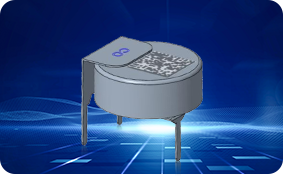
ProSense FC-CO-5000 and FCW-CO-5000-0X: A Unified Sensing Platform Covering Multiple Scenarios
ProSense provides a carbon monoxide sensing solution that covers multiple application scenarios, bringing higher design flexibility to carbon monoxide detector manufacturers and significantly simplifying product compliance processes.
For cross-border e-commerce and whole machine alarm manufacturers, choosing sensor solutions with multi scenario compliance capabilities and mature engineering verification foundations is an important prerequisite for reducing certification risks and accelerating the listing process.
Relying on continuous independent research and development capabilities, the FC-CO-5000 and FCW-CO-5000-0X series carbon monoxide sensors launched by ProSense are currently the only carbon monoxide sensor solutions in the industry that meet UL certification requirements for residential, travel, RV, and yacht applications in both the European Union and North America. They provide a more efficient and reliable core sensor platform for global carbon monoxide detector manufacturers.
In the design phase, the product is systematically planned around multi application scenario compliance and long-term reliable operation, fully considering the comprehensive requirements of temperature adaptability, stability, and consistency of sensors under different environmental conditions. This helps the whole machine manufacturer build a product portfolio covering multiple markets on a single sensing platform.
By adopting FC-CO-5000 and FCW-CO-5000-0X, complete machine manufacturers can reduce the design and certification complexity caused by differences in application scenarios while meeting the requirements of EN50291-1, EN50291-2, UL 2034 (5th edition), CSA 6.19-17, JIA regulations and standards.
Market oriented value
Unified platform: One sensor covers multiple application scenarios, simplifying product portfolio
Compliance guarantee: supporting certification needs for mainstream residential, RV, and yacht markets in the European Union and North America
Reliable operation: Adapt to complex environmental conditions and enhance the long-term stability of end products
Accelerating time to market: reducing the time and cost pressure of repeated testing and re certification
Build portable protection on verifiable reliability
The value of CO detectors for travel lies in their ability to provide reliable warnings even after arriving in unfamiliar environments.
For manufacturers, size, appearance, and battery life are only part of product development. The key to sensor selection and overall design lies in maintaining the response after pollution exposure, ensuring stability after repeated storage, and maintaining sustained effectiveness under real travel conditions.
From suitcases to hotel rooms, every carry should be a part of reliability design.
About ProSense
ProSense is a high-tech enterprise dedicated to the research and manufacturing of advanced gas sensors, committed to providing high-performance and high reliability sensing solutions for global customers. The company continues to invest in core technology research and development, overcome key pain points in the industry, and continuously lead the development direction of gas sensing technology. With innovative products and excellent quality, ProSense is gradually growing into an important promoter and leader in the global gas safety monitoring field.
ProSense adheres to the full stack self-developed technology route, and has established a kilogram level gas sensor catalyst research and development base and an automated production aging calibration system for millions of gas sensors per year. Its product line covers the fields of toxic and harmful, flammable and explosive, and environmental gas detection; ProSense's multiple innovative products have become core sensing components in vertical fields such as smart firefighting, industrial testing, and energy storage safety.