Portable Generator Safety Design | From Carbon Monoxide Monitoring Failure to Whole Machine Recall Risk
News2026-10-26
From OEM manufacturing to brand upgrading: Pay attention to the impact of gasoline volatile poisoning, leakage, condensation, and high-temperature water loss on safe shutdown function
The carbon monoxide monitoring module of the portable generator is responsible for identifying the accumulation of carbon monoxide and triggering a safe shutdown. Its reliability is directly related to the safety protection capability, operational availability, as well as the quality and recall risk of the product after entering the market.
Compared with general indoor monitoring environments, carbon monoxide sensors used in conjunction with generators need to face complex application conditions such as fuel volatiles, engine heat, continuous vibration, temperature and humidity changes, and long-term idle. Accurate measurement at room temperature is only the starting point for product evaluation; Maintaining the ability to detect and shut down continuously within the actual environment and design lifespan is the core of safety design.
Safety requirements from detecting CO to completing safe shutdown
ANSI/PGMA G300 "Safety and Performance of Portable Generators" and UL 2201 "Carbon Monoxide Emission Rate of Portable Generators" both contain requirements for reducing the risk of CO exposure, but their evaluation scope and technical path are different.
1. CO shutdown requirements and emission control
The instantaneous criterion for PGMA G300-2023 has been reduced from 800 ppm in the 2018 version to 600 ppm. UL 2201 requires both low CO emissions and automatic shutdown, with a weighted CO emission rate limit of 150 g/h. The above values correspond to the prescribed testing methods and measurement conditions, and cannot be directly considered as concentrations that personnel can safely be exposed to.
Among them, "10 minute rolling average" is a continuous calculation of the concentration data in the last 10 minutes, which does not mean stopping the machine after the concentration continuously exceeds a certain value for 10 minutes. The software algorithm and experimental evaluation of the product should accurately reflect this requirement.
2. Safety requirements extend to faults and end of life
Article 3.9.1 of PGMA G300-2023 requires the control system and sensitive components to adapt to the working environment and operate within the design life; Simultaneously specify tests for selectivity, dust, vibration, corrosion, and temperature and humidity changes, and conduct post test CO functional verification.
Articles 3.9.1.1 to 3.9.1.4 also involve requirements for self-monitoring, fault and end-of-life shutdown, tamper proof, status indication, and the use of CO sensors with UL certification.
Enlightenment from market events: Failure of CO monitoring module leads to product suspension and delisting
On January 25, 2024, Consumer Reports reported that two Ryobi RY903622VNM portable generators purchased for testing were unable to start due to the malfunction of the CO safety shutdown module. Ryobi subsequently withdrew the model from the market and provided replacement arrangements for customers who encountered related issues.
Source: https://www.consumerreports.org/home-garden/generators/ryobi-stops-sales-of-portable-generator-co-sensor-problem-a6300831445/
According to the report, Ryobi stated that the relevant products were exposed to carbon monoxide environment before consumers purchased them, ultimately leading to the depletion of module batteries; The company has identified environmental exposure issues with a limited number of products in the supply chain and is conducting further investigations. The report also pointed out that another model RYi2022VNM was withdrawn from the market in 2023 due to similar issues.
Such events indicate that the failure of security modules may occur during storage, idle, or normal use phases. For complete machine enterprises, the impact may extend from single unit maintenance to batch replacement, discontinuation, and potential recalls.
It is necessary to manage two types of risks simultaneously: one is the delay or failure of safety shutdown caused by a decrease in detection capability; The second reason is that module abnormalities result in inability to start or repeated shutdowns. Even if the latter embodies fault protection logic, it will still affect product availability and after-sales costs.
Gasoline Vapor: Verification of Interference and Detection Capability after Exposure
Refueling, fuel residue, and fuel system volatilization are chemical exposure scenarios that portable generators need to consider. For carbon monoxide sensors that are not resistant to gasoline vapor poisoning, organic vapor will adsorb onto the surface of the sensitive element and affect the performance of the carbon monoxide sensor, leading to sensor failure.
Regarding gasoline vapor, technical evaluation should distinguish between temporary cross interference, slow recovery, and sustained performance damage. The verification focus is not only on whether gasoline vapor causes false triggering, but also includes:
When co existing with CO, does it suppress CO response or cause low readings;
Can the zero point and sensitivity be restored after steam removal;
Does the response time and shutdown function still meet the requirements after repeated exposure.
Zero point restoration to normal cannot replace CO ventilation retesting. If the zero point is close to the initial value and the CO sensitivity has decreased, the system may still delay reaching the shutdown criterion.
The special verification of fuel vapor should be linked to the selective tests specified in the standard, and supplementary application tests should be conducted based on the actual fuel type, exposure concentration, time, and temperature.
Leakage Risk Analysis: Expanding from Sensor Damage to Module Failure
For traditional water-based liquid electrolyte CO sensors, the electrolyte retention ability and packaging integrity are key to reliability.
Usually, most manufacturers of water-based electrochemical sensors will indicate in their instructions that strong vibrations, impacts, or structural damage may cause performance changes or electrolyte leakage. The transportation, handling, and engine operating conditions of portable generators make the relevant verification practically meaningful.
Leakage may affect the internal electrochemical reaction conditions and may also cause pin corrosion. Module design should also evaluate the impact of leaks on adjacent circuits and connectors.
Therefore, the evaluation after vibration and environmental testing should not be limited to visual inspection, but should also retest CO response, shutdown function, and electrical status to identify potential damages that have not yet formed obvious external leaks.
Condensation: high humidity adaptability and condensation reliability
The transition to a warm and humid environment after low-temperature storage, as well as temperature changes during operation and shutdown, need to be included in the condensation risk analysis.
Condensation is different from general high humidity. Some electrochemical sensor manufacturers explicitly state that internal condensation may cause characteristic drift.
From the perspective of application mechanism, water droplets may also affect the intake channel and gas diffusion, and module moisture may cause additional electrical abnormalities. The evaluation should cover three stages: condensation formation, drying recovery, and post recovery.
The impact of condensation may temporarily recover or be accompanied by sustained damage. Therefore, not all condensation phenomena can be judged as permanent failure, and zero point recovery after drying cannot be the only basis for functional recovery.
When supplementing the condensation test for practical applications, the difference between it and the standard temperature and humidity test should be clarified, and acceptance conditions should be established separately.
High temperature dehydration: temperature compensation cannot repair material loss
Traditional water-based electrochemical sensors require maintaining an appropriate internal moisture balance. According to relevant technical data, repeated high temperature stress may cause electrolyte evaporation and irreversible performance damage; Dry environments may also accelerate water loss, affecting response. The specific degree depends on the formula, structure, and exposure conditions.
The selection and verification of generators should pay attention to the actual temperature of the sensor installation location, including high load operation, post shutdown heat accumulation, and high-temperature storage.
Temperature compensation can correct known temperature response characteristics, but it cannot replenish lost moisture or repair internal structural damage. When evaluating, attention should be paid to the rated temperature range, allowable duration, as well as sensitivity and response retention ability after long-term exposure.
Implement standard compliance into lifecycle reliability
The standardized tests are an important foundation for product evaluation. For specific generator platforms, a supplementary verification plan should be established based on the installation location, usage environment, and expected lifespan.
For vertical applications of portable generators, CO sensors must possess five key capabilities
1. Resistance to gasoline volatile poisoning ability
During the process of gasoline volatilization, a large amount of volatile organic compounds (VOCs) are released. Long term exposure may lead to a decrease in the performance of some sensor sensitive materials, causing zero drift, slow response, and even detection failure.
For portable generators that operate for a long time, CO sensors should have excellent resistance to gasoline vapor pollution, maintain stable output in complex VOC environments, and avoid false alarms and missed alarms.
2. Wide temperature range stable working ability
Portable generators are typically deployed in outdoor environments and need to cover year-round operating conditions from harsh winters to hot summers.
An excellent CO sensor not only needs to have a wide temperature working range, but also needs to ensure that within the entire temperature range:
Sensitivity remains stable;
Consistent response time;
Long term drift is controllable;
The automatic shutdown logic is reliably executed.
True wide temperature stability is an important foundation for the global application of products.
3. No risk of low-temperature freezing
Traditional liquid electrolyte sensors may experience electrolyte freezing in low-temperature environments, leading to a decrease in response speed, sensitivity, and even temporary loss of detection capability.
For generators put into use in extreme weather conditions such as blizzards and cold waves, this means that sensors may not function properly when safety protection is most needed.
Therefore, the absence of low-temperature freezing risk has become an important design indicator for highly reliable CO sensors.
4. No risk of high temperature water loss
The generator engine is in a high-temperature environment for a long time, and some traditional electrochemical sensors may experience performance degradation due to slow evaporation of electrolyte, including:
Decreased sensitivity
Zero drift increases
Shortened service life
Advance calibration cycle
Sensors that can withstand long-term high temperature operation are more conducive to maintaining the long-term stability of the entire CO safety system.
5. No leakage risk
Transportation shock, long-term vibration, and environmental aging may all increase the risk of liquid electrolyte leakage.
Electrolyte leakage not only affects the sensor itself, but may also corrode PCBs, electrical connectors, and electronic control systems, increasing the risk of complete machine failure and after-sales maintenance costs.
For portable generators that emphasize long-term reliability, the selection of anhydrous carbon monoxide sensors or sensor solutions without leakage risks are more in line with the development direction of modern product safety design.
Security protection should not stop at certification
Regulations can define minimum safety requirements, but cannot replace the reliability of the entire product lifecycle.
For global portable generator manufacturers, CO monitoring safety systems not only need to meet standard testing requirements, but also need to maintain consistent detection performance in complex environments.
A highly reliable carbon monoxide sensor suitable for portable generators should also have:
Ability to resist gasoline volatile poisoning
Wide temperature range stable operation capability
No risk of low-temperature freezing
No risk of high temperature water loss
No leakage risk
Long lifespan, low drift, and maintenance free
These capabilities not only determine whether the product can meet regulatory requirements, but also determine whether portable generator manufacturers can continue to fulfill their commitment to user safety throughout the entire product lifecycle, and achieve product differentiation to provide user value.
ProSense FC-CO-5000: A Unified Sensing Platform Covering Multiple Scenarios
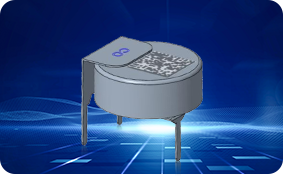
The FC-CO-5000 carbon monoxide sensor launched by ProSense, relying on its independent research and development capabilities, is currently the only CO sensor solution in the industry that meets UL certification requirements for portable generators, residential, RV, and yacht applications.
In the design phase, the product is systematically planned around multi application scenario compliance and long-term reliable operation, fully considering the comprehensive requirements of temperature adaptability, stability, and consistency of sensors under different environmental conditions. This helps portable generator and control module manufacturers build a product portfolio covering multiple markets on a single sensing platform.
By adopting FC-CO-5000, complete machine manufacturers can achieve full lifecycle resistance to gasoline vapor poisoning and no leakage risk while meeting the requirements of ANSI/PGMA G300 and ANSI/UL2201 standards, reducing design difficulties caused by complex application scenarios and truly providing user value.
From Technology to Standards: Compliance Capability Originates from Deep Participation in Standards
In addition to its engineering capabilities at the product level, ProSense actively participates in the construction of the North American gas safety related standard system and is the only member of the technical committees authorized by UL 2075, UL 2034, and UL 2201 in the Asia region of ULSE. Through long-term participation in standard discussions and technical reviews, ProSense maintains a continuous and in-depth understanding of the safety logic, testing boundaries, and future evolution directions behind standard terms.
This role enables ProSense to pre position standard and real-world requirements in the product design and validation phase, and provide feedback on actual engineering experience into the standard system, helping customers form clear judgments on compliance paths in the early stages of product development, reducing repeated testing and uncertainty.
Core value created for manufacturers of portable generators and control modules
Expected compliance: Based on mature standard understanding and certification experience, reduce market access risks in North America
Platform based design: Series sensors cover multiple application scenarios, simplifying product line layout
Engineering reliability: To cope with complex environmental conditions and improve the long-term stability of end products
Efficiency improvement in listing: reducing the time and cost pressure caused by repeated testing and re certification
Looking towards the future, reliability will become a new competitive advantage
With the continuous improvement of global safety regulations and the increasing awareness of active safety functions among consumers, CO monitoring systems are gradually evolving from "regulatory requirements" to a core component of portable generator product design.
In the future, truly competitive CO safety solutions will not only pass standard testing, but also continuously and accurately identify risks under real working conditions, providing users with long-term, stable, and reliable safety guarantees.
For manufacturers, choosing a carbon monoxide sensor is not only a device selection, but also a long-term investment in product safety, brand reputation, and user life safety.
About ProSense
ProSense is a high-tech enterprise dedicated to the research and manufacturing of advanced gas sensors, committed to providing high-performance and high reliability sensing solutions for global customers. The company continues to invest in core technology research and development, overcome key pain points in the industry, and continuously lead the development direction of gas sensing technology. With innovative products and excellent quality, ProSense is gradually growing into an important promoter and leader in the global gas safety monitoring field.
ProSense adheres to the full stack self-developed technology route, and has established a kilogram level gas sensor catalyst research and development base and an automated production aging calibration system for millions of gas sensors per year. Its product line covers the fields of toxic and harmful, flammable and explosive, and environmental gas detection;ProSense's multiple innovative products have become core sensing components in vertical fields such as smart firefighting, industrial testing, and energy storage safety.