Making energy storage HMA compliance possible | PGS 37-1 Energy Storage System Gas Detection Requirements and Application Practice in the Netherlands
News2026-10-21
To provide a solid foundation for energy storage hazard mitigation analysis (HMA) and verification of the effectiveness of safety measures through reliable low concentration detection, environmental adaptability, and sustained reliability
With the development of battery energy storage systems towards higher capacity and more compact structures, gas detection is becoming an important component of energy storage safety design. For equipment manufacturers, system integrators, and operators, the key is whether they can identify risks in the early stages of abnormal development and convert detection signals into timely and effective disposal actions.
The Dutch PGS 37-1:2023 version 1.1 (April 2026) "Lithium Energy Carriers: Energy Storage Systems (EOS)" proposes requirements for low concentration gas detection, continuous monitoring, and graded response around energy storage system risk management, providing important references for the selection, integration, and operation management of detection systems.
Clear detection target: extending from combustible gas volume aggregation to early anomaly identification
In energy storage applications, gas detection bears different levels of safety tasks. Monitoring the accumulation of combustible gases focuses on the risks of combustion and explosion; Early anomaly detection focuses on gas release during battery exhaust and thermal runaway processes, in order to obtain earlier verification and intervention time.
PGS 37-1 proposes in M34 to equip the applicable energy storage system with a permanently installed fixed gas detection system, and to prioritize the use of carbon monoxide detection schemes with cross response to hydrogen gas. Meanwhile, if the CO detection system is not used, it needs to be demonstrated that the alternative system can promptly identify battery exhaust and thermal runaway situations.
This requirement conveys a clear application orientation: the detection scheme needs to be validated around risk identification targets, including target gases, low concentration responses, on-site coverage, and subsequent disposal.
Low concentration detection: matching warnings with actions
Attachment M34 requires the detection system to have a measurement range of 0-200 ppm CO and be able to identify the third level concentration levels specified in Table 1. PGS 37-1:2023 not only focuses on whether gas can be detected, but also emphasizes whether gas concentration can be accurately, stably, and repetitively measured.
CO classification detection concentration and response action
Source: https://publicatiereeksgevaarlijkestoffen.nl/publicaties/online/pgs-37-1/2023/1-1-april-2026#top
This means that the low concentration detection capability must be integrated into the overall performance and response process. For alarm settings at the 10 ppm level, having only a small display resolution is not sufficient. It is also necessary to evaluate zero drift, measurement errors, temperature and humidity effects, background interference, and alarm repeatability.
From the gas sensing element generating a response, to the controller completing the judgment, the communication system sending information, and then to the relevant personnel taking action, each link affects the actual value of the warning. The alarm threshold should be determined synchronously with the responsible personnel, verification procedures, and emergency plans.
Representative point placement to ensure that detection results reflect actual risks
PGS 37-1 requires that the detection should be representative of the space where the battery compartment or energy storage system is located, and the number and installation location of detectors should be based on the guidance of the detection equipment manufacturer.
Engineering design should evaluate whether abnormal gases can reach the detection location in a timely manner, taking into account the battery exhaust position, cabin structure, equipment barriers, and ventilation conditions. Merely determining the installation height based on gas density may not be sufficient to cover the actual airflow and diffusion conditions during operation.
For systems with multiple independent spaces or complex airflow paths, it is recommended to confirm the coverage effect through representative release tests, airflow analysis, or validated calculation methods, and consider normal ventilation, ventilation abnormalities, and different equipment operating states.
The attachment also requires an evaluation of the system's operational reliability and indicates the possible need for redundant configuration; The explanatory text further suggests that at least two CO sensors should be configured to ensure reliability. In practical design, the fault identification, alarm judgment, and maintenance methods of redundant channels should be clearly defined to avoid weakening the detection capability due to single point failure.
Environmental adaptability: Focus on performance at delivery and after use
The attachment clearly requires that the detection principle should be suitable for the environmental conditions such as temperature and humidity in which the equipment is located.
For energy storage systems, this principle should run through the stages of transportation, storage, installation, waiting for acceptance, and normal operation. The detector may experience high temperatures before the air conditioning is turned on, or it may come into long-term contact with volatile substances released from materials inside the cabin. Therefore, selection needs to pay attention to both working temperature, storage temperature, and the ability to maintain performance after environmental exposure.
Suggest focusing on verifying three aspects:
Detection capability after high temperature exposure. Confirm the zero point, sensitivity, and alarm performance of high-temperature operation, non powered storage, and recovery to normal temperature separately.
Stability after exposure to pollutants. Evaluate the effects of silicone, solvents, and other volatile substances on sensing elements, filter materials, and auxiliary compensation elements based on the list of materials such as sealants, coatings, cables, and maintenance supplies.
Continuous effectiveness in long-term operation. Include drift, cross interference, maintenance cycle, and end-of-life criteria in the validation plan.
The above content belongs to engineering suggestions for implementing environmental adaptability requirements. The specific test conditions and acceptance indicators should be determined based on the project environment, product technical documents, and risk assessment.
Identifying technological boundaries, cross response, and independent measurement each have their own purposes
CO sensors with cross response to hydrogen can provide supplementary information for early anomaly identification. But its output is affected by the gas composition and different gas response coefficients, and cannot be directly regarded as an independent and accurate hydrogen concentration.
If the project requires hydrogen concentration trend analysis, multi-level H ₂ alarm, or flammable risk assessment, it should be clarified whether an independent hydrogen measurement channel should be configured, and the range, accuracy, response time, and environmental adaptability should be verified.
Establish a complete response chain from signal output to safety disposal
Attachments M35-M37 link gas detection with continuous monitoring, remote intervention, and system shutdown, and require that monitoring continue to function after emergency shutdown.
This puts forward more complete requirements for system integration: detection signals need to be reliably transmitted, alarms need to be confirmed, relevant controls need to be executed according to established logic, and the operating status should also be recognizable by on-site personnel.
It is recommended to use appropriate testing gases to verify sensor response and check alarm output, communication transmission, and related linkage during project acceptance and operation maintenance. The testing frequency and method should be determined based on the manufacturer's requirements, site conditions, and project specifications.
Normal power on, online communication, and electronic self-test can prove the functionality of some equipment; The gas response capability needs to be confirmed through corresponding functional verification.
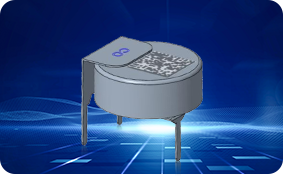
ProSense is a gas sensing solution specifically designed for energy storage systems and AI data center lithium battery scenarios
As an industry leader in the research and manufacturing of advanced gas sensors,ProSense continues to promote technological breakthroughs and international compliance processes in the field of energy storage applications, starting from complex on-site environments.
The company's series of carbon monoxide and hydrogen sensors have become the world's first products to achieve UL silicon poisoning resistance and 85 ° C high temperature reliability certification. The working temperature range of the product covers -40 ℃ to 105 ℃, making it a benchmark in the industry for environmental adaptability, long-term stability, resistance to silicon poisoning, and reliability. It has been widely used in energy storage system safety monitoring, AIDC infrastructure, and new energy related scenarios.
Advanced gas sensing solutions include:
Low concentration and multi-level hydrogen detection and system linkage: achieve integration of low concentration (500ppm), 10% LFL (4000ppm), 25% LFL (10000ppm) multi-level concentration hydrogen detection with battery management system (BMS) and safety control strategy.
Low concentration and multi-level carbon monoxide detection and system linkage: achieve integration of low concentration 10ppm, 20 ppm, 120 ppm multi-level concentration carbon monoxide detection with battery management system (BMS) and safety control strategy
Anti pollution and anti silicon poisoning design: effectively reduces the chemical coverage of sensitive components by interfering substances such as VOCs and siloxanes, and improves the stability of hydrogen and CO sensors in long-term high pollution environments.
Optimization of high temperature resistance: Meet the continuous testing requirements of energy storage facilities under closed energy storage cabinets and high temperature operating conditions before operation.
Improved lifecycle stability: Extend the effective operating cycle of sensors, reduce the risk of frequent on-site replacement, maintenance, and drift.
Supporting more effective risk decision-making with reliable perception
The technical requirements of PGS 37-1 reflect the systematic nature of energy storage gas detection: low concentration identification requires reliable measurement support, representative coverage requires engineering verification support, and alarm value requires timely disposal support.
The technological path of Pusheng Sensing not only focuses on compliance, but also emphasizes the anti-interference ability and reliable operation ability of gas sensors in real energy storage systems and AI data center lithium battery systems, improving the early warning efficiency and overall security level of the system from the source.
ProSense | Making Energy Storage HMA Compliance Possible
About ProSense
ProSense is a high-tech enterprise dedicated to the research and manufacturing of advanced gas sensors, committed to providing high-performance and high reliability sensing solutions for global customers. The company continues to invest in core technology research and development, overcome key pain points in the industry, and continuously lead the development direction of gas sensing technology. With innovative products and excellent quality, ProSense is gradually growing into an important promoter and leader in the global gas safety monitoring field.
ProSense adheres to the full stack self-developed technology route, and has established a kilogram level gas sensor catalyst research and development base and an automated production aging calibration system for millions of gas sensors per year. Its product line covers the fields of toxic and harmful, flammable and explosive, and environmental gas detection; ProSense's multiple innovative products have become core sensing components in vertical fields such as smart firefighting, industrial testing, and energy storage safety.