From product admission, scenario based design to on-site acceptance and continuous supervision, energy storage safety is moving from "equipment compliance" to "full lifecycle safety function verification"
With the acceleration of battery energy storage systems entering the power grid, industrial and commercial parks, artificial intelligence data centers, and urban buildings, the challenge facing energy storage fire safety is no longer just whether the equipment has been certified, but whether the entire system can continuously complete key safety functions such as risk identification, alarm, ventilation, suppression, emergency shutdown, and emergency response in the real installation environment and throughout the entire operation cycle.
The energy storage system licensing management mechanism established by the New York City Fire Department (FDNY) provides a noteworthy governance sample for the global energy storage industry.
This mechanism does not concentrate safety responsibilities on a single certificate, test, or fire protection subsystem. Instead, it constructs a interconnected safety responsibility chain through product level approval, project level design review, fire protection system special approval, on-site linkage testing, operation permit, and annual inspection.
The core message it conveys is very clear:
Obtaining product certification for energy storage systems is only the starting point for entering the project design and fire approval process, rather than the end point of safety responsibility.
TM-2 is not an on-site acceptance, but a product level approval portal for energy storage devices entering the New York market
According to the "Guidelines for Approval and Installation of Energy Storage System Equipment" released by FDNY on April 25, 2025, all battery energy storage systems used for fixed installation and mobile applications generally require a product specific FDNY "Certificate of Approval" (COA).
Manufacturers or their authorized agents need to submit TM-2 applications through the FDNY Business Portal, and the technical management department of the Fire Protection Bureau will conduct technical reviews on specific energy storage products.
TM-2 is the entrance for application documents and product review;
COA is the formal approval document obtained after the product has passed the review;
COA does not equate to a specific project being approved for installation or operation.
FDNY's review of TM-2 data may result in issuing a COA, issuing a defect notification, or refusing approval when the product's chemical system, test reports, and safety performance are insufficient. After obtaining COA, the product has the basic qualification to enter specific project design review in New York City.
This institutional arrangement solves a long-standing industry problem: it is not possible to wait until the equipment arrives at the project site and the system installation is completed before confirming whether the product itself has sufficient fire safety foundation.
Transitioning from certification certificates to a complete technical evidence chain
TM-2 application is not simply submitting a UL certificate. FDNY requires manufacturers to provide a set of technical documents that can fully explain product risks and control measures, including:
NRTL product certification and testing reports based on UL 1741, UL 1973, and UL 9540;
Full scale test report on thermal runaway fire propagation conducted according to UL 9540A;
Hazard Mitigation Analysis (HMA) prepared by a registered architect or professional engineer in the state of New York;
Battery technology roadmap, chemical system, and operating mode;
Built in security system and its action sequence;
Installation, operation, and maintenance manuals;
Safety data sheet and emergency response plan;
The maximum rated energy of a single product;
Scope of application for indoor, outdoor, or rooftop installation;
Remote monitoring technology, monitoring facilities, and alarm management capabilities;
Expected application instructions for power grid support, building power supply, emergency power supply or UPS.
This means that the product admission logic in New York is not simply about judging whether there is certification, but further examining:
What tests has the product passed, what are the test boundaries, how are the actual risks mitigated, how the security system operates, and how are exceptions discovered and handled.
Certification, full-scale testing, hazard mitigation analysis, and emergency response documents together form the product level safety evidence chain, and no single document can automatically replace a complete assessment.
Product approval does not equal project approval
After obtaining the FDNY COA, each energy storage project still needs to undergo project level design review based on installation capacity, indoor or outdoor location, building conditions, and surrounding environment.
The New York City Department of Buildings (DOB) requires energy storage projects to be declared according to the category of electrical energy storage equipment and undergo a complete drawing review, and does not allow the use of simplified declaration methods certified by professionals themselves. The project may also require submission of energy storage system certification, full-size testing data FDNY COA、 Documents such as energy storage plan, on-site hazard mitigation analysis, commissioning plan, and FDNY conditional acceptance letter.
For projects that require FDNY for engineering review, registered design professionals also need to submit:
The specific installation location and layout plan of the energy storage system;
The site conditions within a certain range of the surrounding area;
Fire truck access, fire water source, and fire interface;
Design of fire alarm, gas detection and extinguishing systems;
Install, operate, and maintain files;
Debugging and retirement plan;
Project specific emergency management plan;
On site hazard mitigation analysis signed and stamped;
Information on remote monitoring facilities and certified operators.
This distinction is very important.
The risk boundary of the same energy storage device that has obtained COA is not the same when installed on independent outdoor sites, inside buildings, rooftops, data centers, or densely populated areas. Product approval addresses whether the equipment meets the basic admission requirements, while project approval addresses:
Can this device operate safely at this specific location and according to this specific design.
The fire protection system must be designed, approved, and accepted separately
The energy storage permit mechanism in New York does not consider fire alarm, gas detection, emergency alarm, and fire suppression systems as ancillary configurations of energy storage equipment.
When regulations, COA conditions, or hazard mitigation analysis require the installation of relevant fire protection systems, these systems need to be separately submitted for FDNY review and undergo on-site inspection and functional testing after installation is completed.
Fire alarm applications related to energy storage systems need to clarify:
What protection method should be adopted;
Which detection devices will trigger the system;
The project belongs to the application of energy storage system;
The capacity of energy storage devices;
Technical specifications of controllers and on-site equipment;
How to transmit alarm signals to remote monitoring or central monitoring stations.
Alarm and detection equipment used in outdoor environments also need to meet corresponding weather resistance levels and operating temperature requirements; Roofs and large outdoor energy storage systems may also require the installation of radiation energy sensing fire detection systems.
This indicates that the design of energy storage fire protection cannot be limited to the labeling of "gas detector configuration" or "connection to fire protection host" on the drawings. What really needs to be reviewed is the entire security function chain:
Danger occurrence - sensor recognition - controller judgment - alarm signal transmission - ventilation or fire extinguishing action - energy storage system shutdown - remote monitoring reception - personnel response.
If there is no clear action logic, performance boundary or fault diagnosis mechanism in any of the links, even if the system is equipped with a large number of fire-fighting equipment, it may not be able to play the expected role in the early stages of the accident.
The on-site acceptance verification is whether the system can truly operate
After the energy storage equipment is installed according to the approved drawings, the project cannot be directly put into operation.
Before applying for final inspection, fire alarm, emergency alarm, gas detection, and non water-based fire extinguishing systems need to be tested separately and obtain corresponding approval documents. If defects are found on site, FDNY can request rectification, retesting, and even resubmit modified design drawings.
The final debugging and emergency stop testing not only verify whether the equipment is installed properly, but also validate:
Can the emergency stop button put the energy storage system into a predetermined safe state;
Can fire and other detection devices trigger correct linkage;
Public information from the local government shows that the facility has sparked controversy in terms of operating permits, local supervision, special inspections after major weather events, system modification notifications, and responsibility coordination. After the accident, the local government required the system to disconnect from the grid, reduce the voltage of energy storage units, conduct third-party environmental assessments, and hold accountable those responsible for cleaning, monitoring, and emergency services.
This incident illustrates that if there is a lack of continuity between product approval, project acceptance, and subsequent operational supervision, even if the system has been tested or rectified, the following risks may still arise:
The equipment has undergone significant changes, but the regulatory authorities have not received timely information;
Failure to conduct specialized safety checks after extreme weather or moisture intrusion;
Remote monitoring is disconnected from on-site permit status;
The project meets the grid connection conditions, but may not necessarily meet the local fire operation requirements;
The rectification measures after the accident lack independent verification;
The responsibility boundaries between manufacturers, operators, utility companies, and local governments are unclear.
Therefore, energy storage fire safety cannot stop at "compliance at the time of construction", and must also ensure that the system is in a controlled state at every operational stage.
The operation permit means that the safety responsibility has not ended after acceptance
After passing the final inspection, FDNY issues approval documents and on-site operation permits, which are valid for one year.
FDNY can also conduct inspections after the system is put into operation, and repeat debugging and related verification procedures before the annual license expires to confirm that the energy storage system still maintains continuous compliance and effective performance. If there is a change in the remote monitoring service provider, it is necessary to re verify whether the emergency stop signal can be transmitted correctly.
This reflects a valuable principle in the safety management of energy storage in New York:
The fire safety acceptance confirms the initial state at a certain point in time, while the operation permit and periodic inspection verify whether the safety function can be continuously maintained.
The battery performance, sensor sensitivity, fire control logic, communication link, and operation and maintenance capabilities of energy storage systems will all change over time. Focusing only on the initial acceptance without subsequent inspections cannot prove that the system is still reliable for five, ten, or even longer operating cycles.
Six inspirations of the New York model for the global energy storage and fire protection system
1. Establish a product level security access mechanism
Before energy storage products enter the project, product certification, full-scale thermal runaway testing, hazard mitigation analysis, and technical document review should be completed.
When there are significant changes in equipment model, battery cell chemical system, structure, energy capacity, cooling method, fire protection configuration or control logic, the original testing and approval should be re evaluated to avoid the problem of "one-time certification, unlimited extension".
2. Strengthen project level scenario based design
Energy storage safety cannot solely rely on standardized product solutions.
The design unit should combine the installation location, capacity, building structure, adjacent exposure, ventilation conditions, fire truck access, water source, environmental temperature, flood risk, and personnel density to form special hazard mitigation measures for the project.
For critical facilities such as artificial intelligence data centers, it is also necessary to consider personnel safety, asset protection, and business continuity simultaneously to avoid large-scale unplanned downtime caused by a single security action.
3. Incorporate gas detection into safety function verification
Thermal runaway of energy storage may release flammable gases such as hydrogen and carbon monoxide. Gas detection systems should not only prove their ability to sense gases, but also verify:
Accuracy and repeatability near the actual alarm threshold;
Adaptability to temperature, humidity, condensation, and complex mixed gases;
Tolerance to pollution from siloxanes, VOCs, and electrolyte volatiles;
Fault identification of drift, poisoning, disconnection, output freezing, and end-of-life status;
Complete linkage from detection and alarm to ventilation, shutdown, and remote notification;
Can it continue to meet the design alarm threshold after long-term operation.
Gas detectors used for safety linkage are essentially not ordinary monitoring instruments, but key safety components in the energy storage risk control chain.
4. Shift from "installation completed" to "linkage closed-loop acceptance"
Acceptance should verify the complete logic between sensors, controllers, alarm systems, ventilation systems, fire suppression systems, emergency shutdowns, and remote monitoring through real or simulated triggering conditions.
Only when risk signals can be identified, transmitted, and converted into correct actions within the specified time, can fire protection design truly form a closed loop.
5. Establish an operating license and change management system
After the energy storage project is put into operation, a periodic inspection, sensor calibration, pollution assessment, remote communication testing, maintenance record review, and emergency drill system should be established.
When replacing battery cells, sensors, controllers, software algorithms, monitoring service providers, or fire-fighting equipment, it is necessary to evaluate whether the changes affect the original hazard mitigation analysis and linkage logic. Unmanned local changes may cause the already accepted system to gradually deviate from the original safety design.
6. Re evaluate major changes and abnormal events
After replacing battery cells, sensors, controllers, software algorithms, remote monitoring service providers or fire-fighting equipment, as well as in the event of flooding, condensation, extreme weather, abnormal heating, and fire incidents, the hazard mitigation analysis and original linkage logic should be re evaluated.
Unmanned local changes may cause the already accepted system to gradually deviate from the original safety design.
Global energy storage security needs to move from a 'standard checklist' to a 'responsibility loop'
Currently, the fire safety of many energy storage projects still revolves around the standard checklist
Equipment that has obtained UL 9540 certification, completed UL 9540A testing, and configured fire alarm and extinguishing systems are often considered to have established complete safety measures.
But New York TM-2 and its subsequent licensing process remind the industry that standards and testing can only answer some questions.
UL 9540 certifies that energy storage system products meet the corresponding certification requirements; UL 9540A provides data on thermal runaway propagation and fire characteristics under specific testing conditions; COA addresses product level access; The on-site design review addresses the applicability of specific projects; The final debugging and emergency stop testing verify the safety function chain; The annual licensing inspection focuses on the continuous operation capability of the system.
Only by connecting these links can a complete energy storage fire safety system be formed.
From license compliance to full lifecycle reliability
The licensing management system of FDNY in New York indicates that the fire safety of energy storage systems depends not only on whether the product has obtained admission qualifications, but also on whether the safety functions can continue to be effective during project design, installation, commissioning, linkage testing, and long-term operation.
Gas detection, as an important component of early warning for thermal runaway in energy storage, has value not only in "detecting gas", but also in providing stable, accurate, and safe concentration information in complex environments. High temperature, humidity, siloxanes, electrolyte volatiles, and other pollutants can all affect the long-term performance of sensors. If the detection components drift, become poisoned, or fail, and the system lacks an effective fault identification mechanism, it may weaken the reliability of the entire fire safety chain.
As an industry leader in the research and manufacturing of advanced gas sensors, Pusheng Sensing continues to promote technological breakthroughs and international compliance processes in the field of energy storage applications, starting from complex on-site environments.
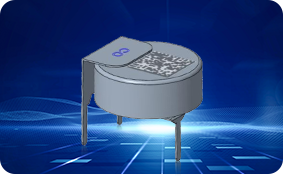
ProSense is a hydrogen and carbon monoxide fuel cell sensor developed specifically for energy storage systems and data center applications. Its operating temperature range covers -40 ° C to+85 ° C, making it the world's first advanced sensor brand to receive UL Solutions certification for 1024 hours of silicon poisoning resistance and 85 ° C high temperature reliability. The relevant verification not only focuses on whether the sensor can detect the target gas under laboratory conditions, but also on its performance in maintaining long-term detection ability in high temperature and pollutant environments.