Market Report for the Year of the Horse | Chile's Mandatory Installation Law for Smoke and CO Alarm Devices Accelerates: 7.6 Million Residential Markets Enter Compliance Window
News2026-09-07
Latin American residential life safety regulation continues to upgrade, Chile is moving towards the era of widespread smoke and carbon monoxide alarms
Following the continuous strengthening of residential smoke and carbon monoxide (CO) alarm regulations in multiple European and American countries, Chile is pushing for legislation to mandate the installation of smoke and CO alarms in new residential buildings, rental housing, housing transactions, and hotel accommodations.
The bill has been unanimously passed by the House of Representatives, and as of September 2026, it is in the second stage of review by the Chilean Congress and will soon become a fully effective national law.
From newly-built residential buildings to hotel rooms: the bill proposes to establish a multi-level mandatory installation system
The merger bill currently under review by the Chilean Congress is consolidated into bills 14.526-14, 16.919-14, and 17.290-14. The House of Representatives has completed the first stage of deliberation, and the project is currently entering the second stage of the Senate.
According to the current approved text, the regulatory scope mainly covers the following four scenarios:
New residential buildings: Include independent smoke and CO detection and alarm devices in the residential building design phase, and cover all floors and interior units of the building.
Single family and collective residential buildings: In principle, at least one set of relevant detection and alarm devices should be installed on each floor.
Rental and transactional housing: The owner of the property must ensure that the installation is functioning properly when renting or selling; When the rental housing is not configured, the lessee can install it after negotiating with the landlord and deduct the cost from the rent.
Hotels and accommodation facilities: Hotels, inns, homestays, boarding facilities, and other accommodation service venues are proposed to require each room to be equipped with relevant devices.
The bill also proposes to include the maintenance, inspection, and certification of alarm devices in the responsibilities of co managed property managers. If ultimately approved, market demand will no longer be limited to one-time purchases by real estate developers, but will extend to property management, lease delivery, housing transactions, hotel operations, and subsequent replacement and maintenance.
7.6 million residential units in stock, opening up a large-scale entrance for the alarm market
According to the 2024 Population and Housing Census conducted by the Chilean National Institute of Statistics (INE), a total of 7642716 residential units were recorded nationwide, including 7638396 private residential units; There are a total of 6596527 families in the country. The number of residential buildings has increased by 17.8% compared to 2017, indicating that both new construction and stock renewal have a sustained demand foundation.
Among them, 1728199 households live in rental housing, accounting for 26.2% of all households. Due to the direct connection between the normal operation of the device and the rental and sale of houses in the bill, rental housing is expected to become one of the first segmented markets to form verifiable demand after the regulations come into effect.
From policy pilot to national legislation: Special housing projects have taken the lead in proposing technical requirements
While the national bill is still under review, the Chilean Ministry of Housing and Urban Development (MINVU) has requested the installation of CO detectors and smoke alarms in some housing improvement projects. The technical requirements for the relevant projects announced in 2025 propose that specific improvements or expansions of housing should be equipped with devices in each bedroom, kitchen, and dining room; Open kitchens and dining rooms can be combined as required, and kitchens can use smoke and CO combination products.
More noteworthy is that the document requires detection and alarm devices to obtain relevant certifications from the Chilean Electricity and Fuel Regulatory Agency (SEC), or to accept certifications issued by internationally recognized laboratories, including UL, FM, CE related qualified paths or laboratories with NRTL qualifications, when official technical standards are not yet complete. For residential buildings for people with hearing impairments, it is also necessary to consider built-in or external strobe lights.
This means that the procurement logic in the Chilean market is gradually shifting from "whether to install" to "what to install, how to certify, and how to continue reliable operation". Products with a mature international certification foundation have a better chance of entering the supply chain assessment of government projects, developers, hotel groups, and large distributors before the formal implementation of regulations.
SEC and MINVU: The final compliance path still needs further clarification of supporting rules
As for the national bill, the final product standards, certification bodies, installation locations, maintenance cycles, and transition periods still need to wait for legislative completion and subsequent regulatory clarification. At present, it is not appropriate to describe a certain international standard as the only legal admission standard for the Chilean national market.
But from the regulatory signals released by special housing projects, manufacturers can prioritize establishing product development around the following international mainstream standards.
Climate characteristics and CO sensor selection in Chile
Chile spans over 4000 kilometers from north to south, with climate conditions extending from extreme arid deserts in the north to cold and rainy regions in the south. In the autumn and winter seasons, there is a widespread demand for heating in residential areas in the central and southern regions. The use of gas heaters, fireplaces, and wood burning equipment makes carbon monoxide alarms an important residential safety product. For CO alarm manufacturers, Chile is a typical market for cross climate bandwidth temperature applications:
The high temperature in the northern and central inland areas during summer can exceed 35 ° C, while the temperature in the roof mezzanine and enclosed spaces may exceed 40 ° C
Winter temperatures in southern, Patagonian, and high-altitude regions can drop below -10 ° C
Coastal and southern regions have long faced high humidity, salt spray, and rainy environments
Heating in winter and large indoor outdoor temperature differences can easily cause condensation and dew formation
Significant temperature difference between day and night in the northern desert region
Therefore, manufacturers of carbon monoxide detectors must pay special attention to the selection of key components such as CO sensors
✓ Wide temperature performance
✓ Long term stability
✓ Low temperature start-up capability
✓ Ability to resist humidity effects
✓ Anti silicon poisoning ability
It should be noted that traditional water based carbon monoxide sensors add pure water to the water storage tank, which freezes in low temperature environments, resulting in the inability to provide the water needed for chemical reactions, thus preventing chemical reactions from occurring and causing the sensor to lose its detection function.
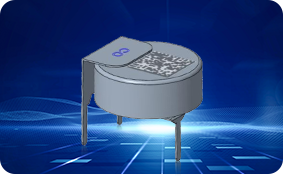
FC-CO-5000 and FCW-CO-5000-0X: A unified sensing platform for multi scenario applications
ProSense provides a carbon monoxide sensing solution that covers multiple application scenarios, bringing higher design flexibility to carbon monoxide detector manufacturers and significantly simplifying product compliance processes.
Relying on its independently developed gas sensing technology platform,ProSense has become the world's first CO sensor manufacturer to pass UL Solutions' 1024 hour anti silicon poisoning test and 85 ° C high temperature reliability certification.
The FC-CO-5000 and FCW-CO-5000-0X series carbon monoxide sensors from ProSense have a working temperature range covering -40 ° C to+85 ° C. They are currently the only CO sensor solutions in the industry that meet UL certification requirements for residential, RV, and yacht applications in both the European Union and North America.
In the design phase, the product is systematically planned around multi application scenario compliance and long-term reliable operation, fully considering the comprehensive requirements of temperature adaptability, stability, and consistency of sensors under different environmental conditions. This helps the whole machine manufacturer build a product portfolio covering multiple markets on a single sensing platform.
By adopting FC-CO-5000 and FCW-CO-5000-0X, complete machine manufacturers can reduce the design and certification complexity caused by differences in application scenarios while meeting the requirements of EN50291-1, EN50291-2, UL 2034 (5th edition), and CSA 6.19-17 standards.
This unified platform solution helps reduce design adjustments and duplicate certification work caused by differences in application scenarios, thereby improving development efficiency and optimizing the overall compliance path, making global compliance simpler and enabling alarm enterprise owners to operate worry free.
Market oriented value
✓ Unified platform: Covering multiple application scenarios with one core sensor, simplifying product portfolio
✓ Compliance assurance: Supports certification requirements for mainstream residential, RV, and yacht markets in Europe and North America
✓ Reliable operation: Adapt to complex environmental conditions and improve the long-term stability of end products
✓ Accelerate time to market: reduce the time and cost pressure caused by repeated testing and re certification
About ProSense
ProSense is a high-tech enterprise dedicated to the research and manufacturing of advanced gas sensors, committed to providing high-performance and high reliability sensing solutions for global customers. The company continues to invest in core technology research and development, overcome key pain points in the industry, and continuously lead the development direction of gas sensing technology. With innovative products and excellent quality, ProSense is gradually growing into an important promoter and leader in the global gas safety monitoring field.
ProSense adheres to the full stack self-developed technology route, and has established a kilogram level gas sensor catalyst research and development base and an automated production aging calibration system for millions of gas sensors per year. Its product line covers the fields of toxic and harmful, flammable and explosive, and environmental gas detection; ProSense multiple innovative products have become core sensing components in vertical fields such as smart firefighting, industrial testing, and energy storage safety.