Is it harder to ensure the safety of energy storage plants than to comply with regulations? ——In depth Analysis of Insurance Mechanisms and Risk Responsibility Chains in China and the United States
News2026-09-10
With the continuous expansion of electrochemical energy storage scale, energy storage power stations are becoming an important component of energy infrastructure. At the same time, fires, explosions, equipment damage, and facility shutdowns caused by battery thermal runaway also pose more complex property risks and business continuity challenges for energy storage projects.
For the insurance industry, a question worth rethinking is:
Is the value of insurance only reflected in the compensation for losses after an accident occurs?
From the perspective of mature industrial property risk management concepts, the answer is clearly not limited to this.
Truly effective risk management should identify hazards before losses occur, reduce risks during the design and operation phases, and limit the scope of losses and shorten recovery time as much as possible after accidents occur.
Therefore, for energy storage power plants, insurance is further extending from traditional risk transfer to loss prevention and resilience construction.
The starting point of insurance is established before accidents occur
Traditionally, people often understand insurance as:
Accident occurrence → Loss confirmation → Insurance claim
But for large-scale energy storage projects, this logic is changing.
Once a thermal runaway accident occurs, its impact may not be limited to one battery cell, one rack, or one energy storage compartment.
The fire may spread to adjacent energy storage units and further affect transformers, substation facilities, cables, and other critical assets; At the same time, equipment damage, fire disposal, accident investigation, and equipment replacement may also cause business interruptions lasting for weeks or even longer.
Therefore, what insurance companies really need to evaluate is not just:
What is the probability of an accident occurring?
This also includes:
Once an accident occurs, to what extent may the losses expand?
And also:
Does the project have the ability to effectively limit losses and quickly restore operations?
This has gradually transformed energy storage insurance from a simple financial compensation mechanism to a risk management mechanism that runs through the project design, construction, operation, and recovery stages.
China: Energy storage insurance is establishing a full lifecycle risk management framework
With the rapid growth of domestic energy storage installed capacity, the Chinese insurance industry is gradually establishing a more systematic energy storage risk assessment system.
The China Insurance Industry Association has released the "Guidelines for Risk Assessment of Electrochemical Energy Storage Power Station Insurance", which starts systematic risk identification of energy storage projects from the construction and operation periods, and provides reference for underwriting strategies, risk assessment, and risk reduction services.
This means that domestic energy storage insurance is gradually shifting from:
Compensation for losses after the accident
Risk identification before insurance application → Underwriting risk assessment → Risk reduction during operation → Accident handling → Claims and risk improvement
Development.
This change is of great significance.
This requires insurance institutions to have a deeper understanding of the technical risks of energy storage power plants, equipment reliability, fire protection design, effectiveness of thermal runaway monitoring technology routes, operation and maintenance, and emergency response capabilities. Each link is an important factor affecting the overall risk level of the project.
In the long run, insurance will not only assume the function of risk transfer, but may also become an important market mechanism to promote the continuous improvement of safety levels in energy storage projects.
US: Engineering risk management enters project lifecycle earlier
In contrast, insurance arrangements for large-scale energy projects in the United States are typically more closely linked to project financing, risk engineering, and technical due diligence.
For large-scale BESS projects, insurance risk assessment does not simply focus on whether they meet the minimum regulatory requirements. Risk engineering usually requires further understanding of:
Is it possible for the battery to propagate to adjacent units after thermal runaway;
Is there a reasonable spatial separation between energy storage units;
Whether effective risk isolation has been achieved between energy storage facilities, transformers, and other critical assets;
Can the fire protection and detection system function according to the design;
Is there a single point of failure that may cause widespread shutdown;
Can critical equipment be replaced in a timely manner after damage;
And how long it will take for the project to resume normal operation after the accident.
Therefore, even if a project complies with relevant regulations, it does not necessarily mean that its risk level has reached the expected state of insurance institutions.
From the perspective of insurance risk engineering, the more important issue is:
Has the project taken reasonable and validated engineering measures to control foreseeable property losses within an acceptable range.
Shift from 'whether accidents have occurred' to 'whether accidents can be restricted'
Energy storage safety discussions often focus on how to avoid thermal runaway of batteries. But from the perspective of property risk management, we must also face another reality:
Not all equipment failures and abnormal events can be completely eliminated.
Therefore, a resilient energy storage project not only needs to reduce the probability of accidents, but also needs to have the ability to limit the consequences of accidents.
For example:
Will a single battery cell malfunction necessarily develop into an accident for the entire rack?
Will a rack experiencing thermal runaway necessarily spread to the entire energy storage compartment?
Will a fire in an energy storage compartment further affect adjacent energy storage units?
Can a local accident lead to the long-term shutdown of the entire energy storage power plant?
These issues directly determine the severity of the loss caused by the accident.
Therefore, spatial separation, fire design, thermal management, early detection, fire protection systems, emergency response, and accident recovery plans are not independent safety measures.
They together form a set:
An engineering defense line to prevent local failures from escalating into significant property damage.
Risk responsibility chain: Each line of defense needs to clarify the responsible party
Energy storage projects have a typical multi stakeholder structure. From battery cell manufacturing, to BESS equipment design, system integration, EPC construction, to safety systems, operation and maintenance, and asset management, different stakeholders jointly determine the final risk level of the project.
Therefore, instead of simply discussing who is responsible after an accident occurs, it is more important to answer before the accident occurs:
Who poses risks?
Who can control the risk?
Who is responsible for ensuring the long-term effectiveness of risk control measures?
Establish a clearer energy storage risk responsibility chain based on the division of labor in each chain:
Insurance liability and accident liability are not the same concept
This is a very important point to understand the energy storage insurance mechanism. After an accident occurs, the insurance company may first compensate for property losses or business interruption losses that meet the underwriting conditions according to the insurance contract.
However, insurance compensation does not mean that the accident liability is terminated as a result.
If the subsequent accident investigation confirms that the loss is caused by equipment manufacturing defects, design issues, construction errors, or third-party liability, further liability recovery may occur in compliance with applicable laws and contract conditions.
Therefore, a typical energy storage accident forms:
Only when these mechanisms work together can a complete energy storage risk management loop be truly formed.
Early gas detection for thermal runaway management: moving from "safety configuration" to "loss prevention tools"
In the energy storage risk responsibility chain, building a reliable low concentration and multi-level hydrogen monitoring and early warning system provides particularly important data support for insurance companies and owners. Low concentration and multi-stage hydrogen detection have become key technological paths for improving system safety, reliability, and business continuity by shifting safety strategies to early risk stages and transforming energy storage systems from "passive response" to "active prevention".
For gas detectors, long-term operation may face:
Sensor drift and poisoning, environmental temperature changes, humidity effects, exposure to pollutants, material volatiles, and natural aging.
If the detector has experienced significant performance degradation but the system still displays' normal ', the project may pose a more covert risk:
The security function has decreased or failed, but the operators are not aware of it.
Therefore, from the perspective of preventing property damage, what is truly worth paying attention to is not only whether the detector passes the initial test.
But rather:
How to prove that critical safety functions remain effective throughout the entire design lifecycle.
This will gradually make the reliability, anti poisoning ability, drift monitoring, fault monitoring, lifespan status, and maintenance strategy of gas detectors a part of long-term risk management for energy storage.
ProSense is a gas sensing solution specifically designed for energy storage systems and AI data center lithium-ion scenarios
As an industry leader in the research and manufacturing of advanced gas sensors, ProSense continues to promote technological breakthroughs and international compliance processes in the field of energy storage applications, starting from complex on-site environments.
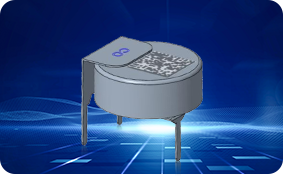
ProSense is a hydrogen and carbon monoxide fuel cell sensor developed specifically for energy storage systems and data center applications. Its operating temperature range covers -40 ° C to+85 ° C, making it the world's first advanced sensor brand to receive UL Solutions certification for 1024 hours of silicon poisoning resistance and 85 ° C high temperature reliability. The relevant verification not only focuses on whether the sensor can detect the target gas under laboratory conditions, but also on its performance in maintaining long-term detection ability in high temperature and pollutant environments.
Advanced gas sensing solutions include:
Low concentration and multi-level hydrogen detection and system linkage: achieve integration of low concentration (500ppm), 10% LFL (4000ppm), 25% LFL (10000ppm) multi-level concentration hydrogen detection with battery management system (BMS) and safety control strategy.
Anti pollution and anti silicon poisoning design: effectively reduces the chemical coverage of sensitive components by interfering substances such as VOCs and siloxanes, and improves the stability of hydrogen and CO sensors in long-term high pollution environments.
Optimization of high temperature resistance: Meet the continuous testing requirements of energy storage facilities under closed energy storage cabinets and high temperature operating conditions before operation.
Improved lifecycle stability: Extend the effective operating cycle of sensors, reduce the risk of frequent on-site replacement, maintenance, and drift.
A safer project should also be a more resilient project
The development paths of energy storage insurance markets in China and the United States are not entirely the same.
China is gradually establishing a more systematic full lifecycle risk management system through insurance risk assessment guidelines, energy storage special insurance, and risk reduction services. The US market highlights the linkage between engineering risk assessment, project financing, insurance underwriting, and loss prevention.
But both are ultimately heading in the same direction:
The value of insurance is not only to provide financial compensation for losses, but also to help businesses avoid preventable losses.
For future energy storage projects, a truly competitive safety system should not only answer:
Do we meet the standards
You should also answer:
Where are our key risks
What engineering measures can reduce these risks
Can these measures remain effective throughout the entire lifecycle
If the accident still occurs, can we limit the losses and quickly restore operations
This is the transition from compliance to resilience.
Through scientific research, engineering design, reliable products, effective maintenance, liability management, and insurance coverage, transform unpredictable major losses into:
Identifiable, controllable, tolerable, and recoverable risks.
It is also about asset value, business continuity, and the ability of energy infrastructure to operate reliably in the long term.
About ProSense
ProSense is a high-tech enterprise dedicated to the research and manufacturing of advanced gas sensors, committed to providing high-performance and high reliability sensing solutions for global customers. The company continues to invest in core technology research and development, overcome key pain points in the industry, and continuously lead the development direction of gas sensing technology. With innovative products and excellent quality, ProSense is gradually growing into an important promoter and leader in the global gas safety monitoring field.
ProSense adheres to the full stack self-developed technology route, and has established a kilogram level gas sensor catalyst research and development base and an automated production aging calibration system for millions of gas sensors per year. Its product line covers the fields of toxic and harmful, flammable and explosive, and environmental gas detection; ProSense multiple innovative products have become core sensing components in vertical fields such as smart firefighting, industrial testing, and energy storage safety.